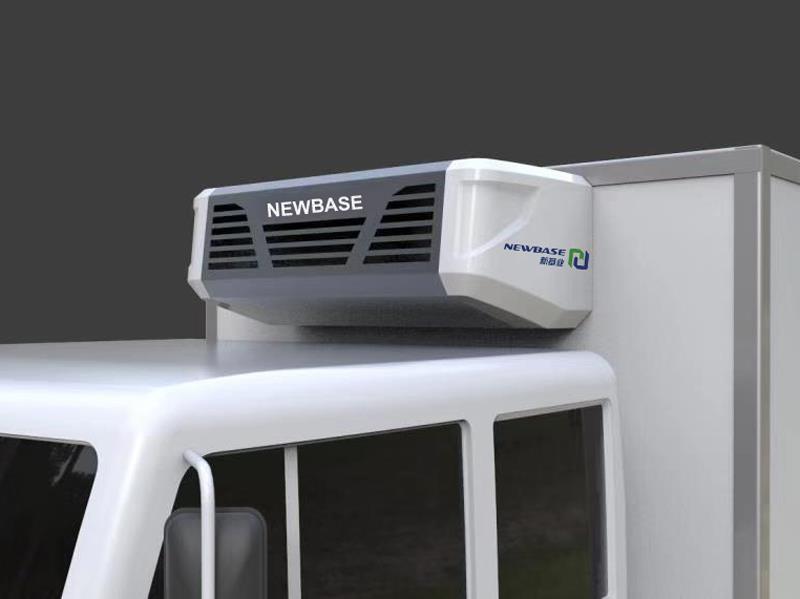
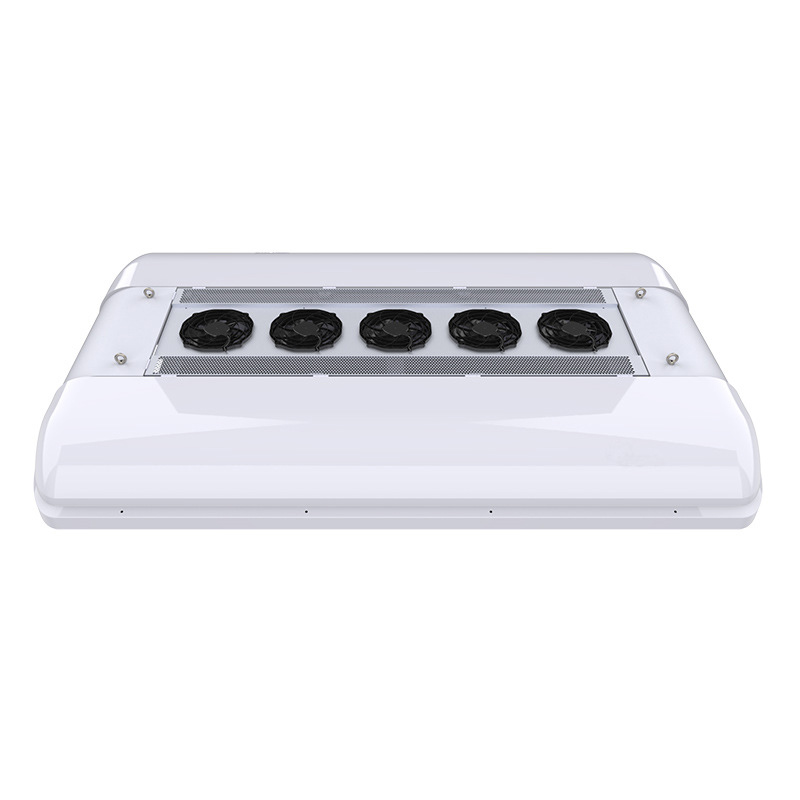
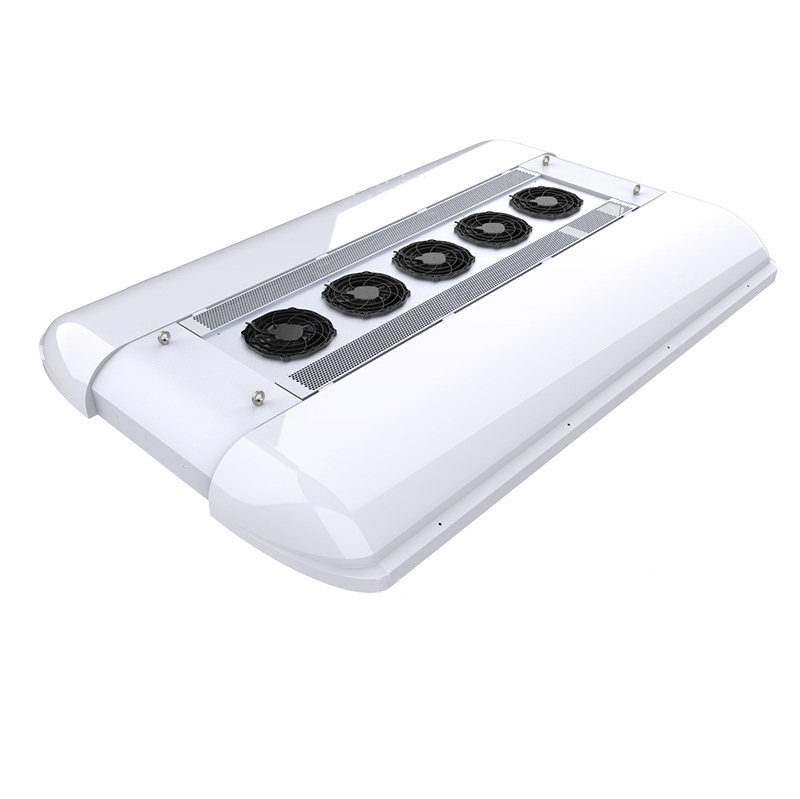
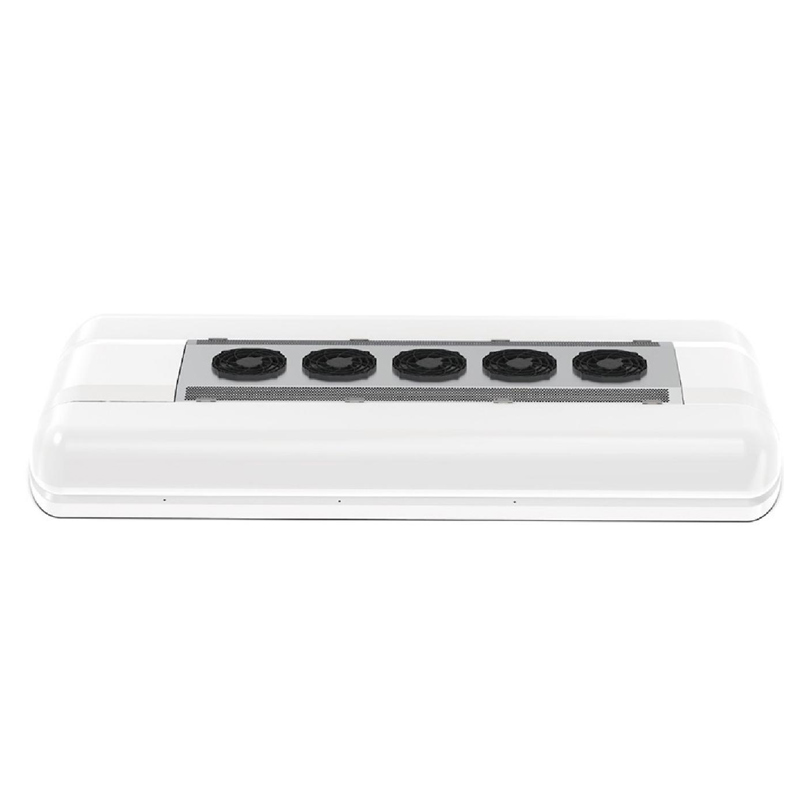
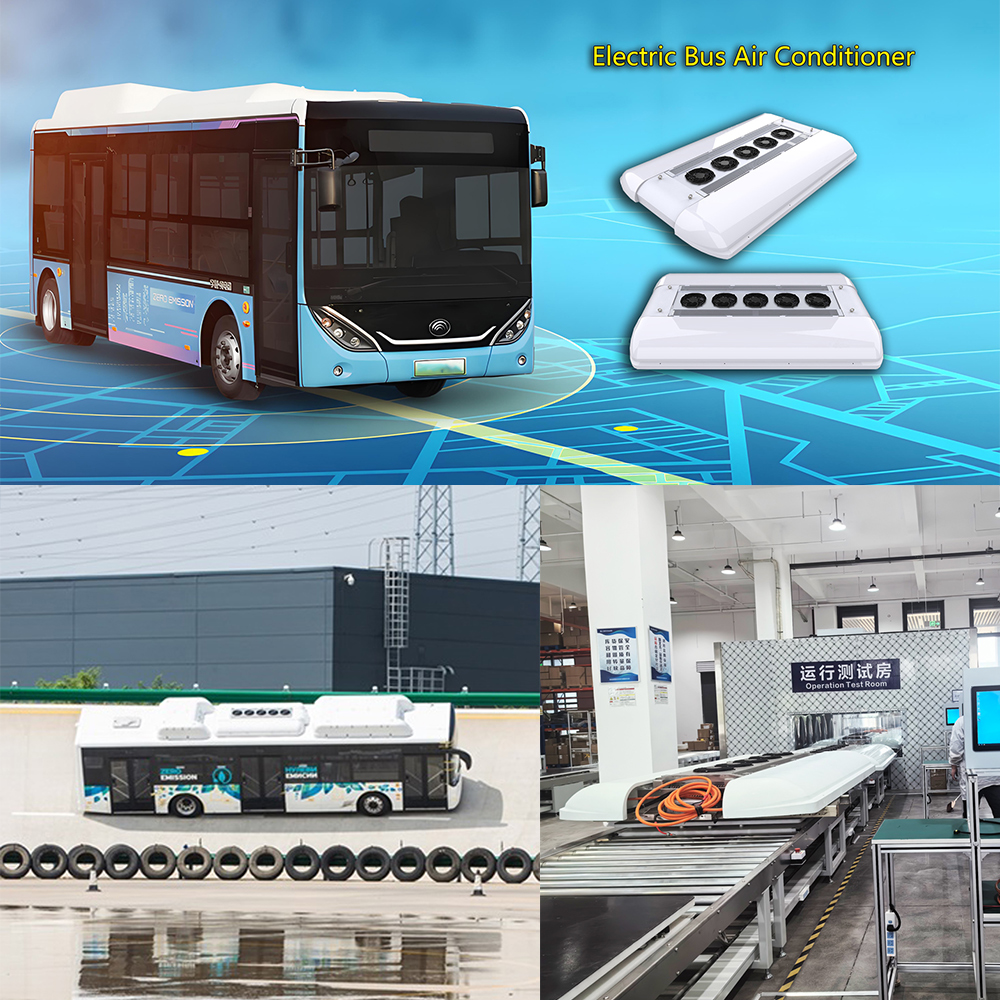
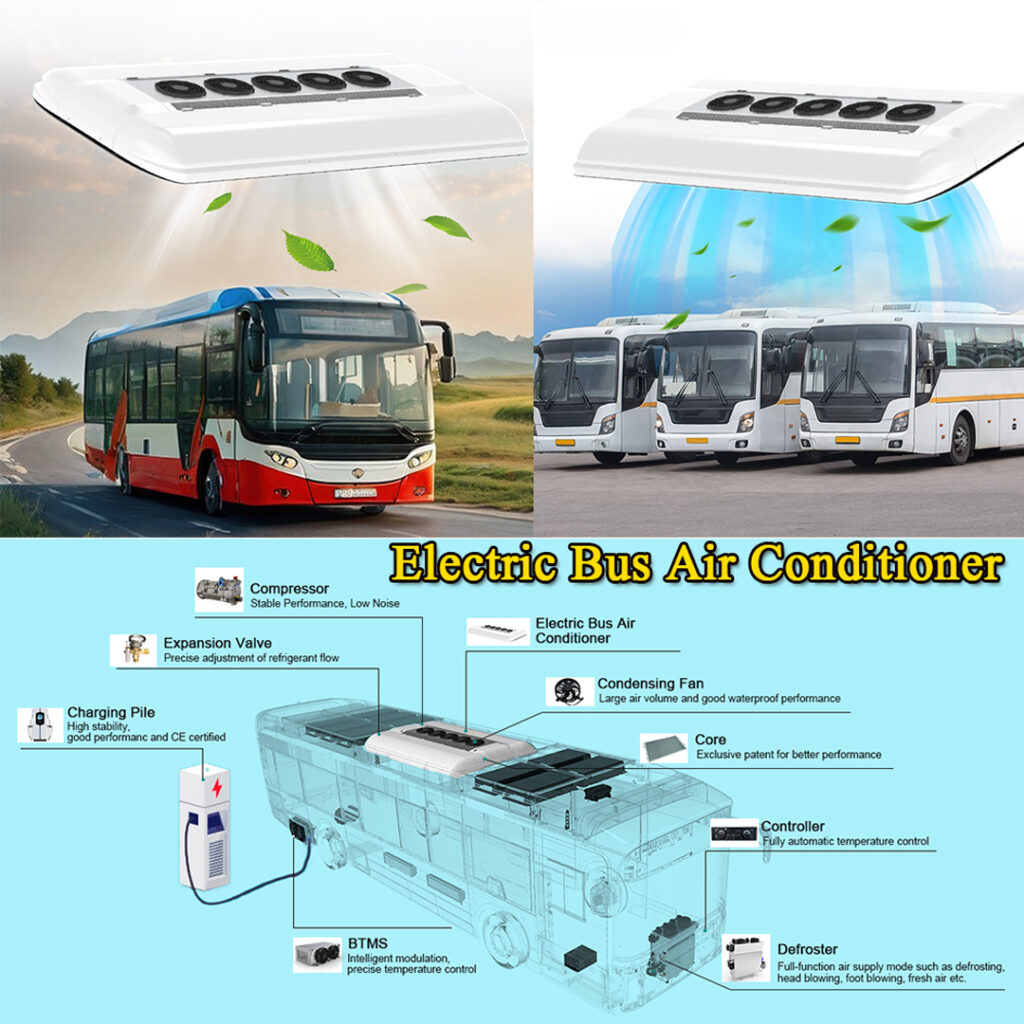
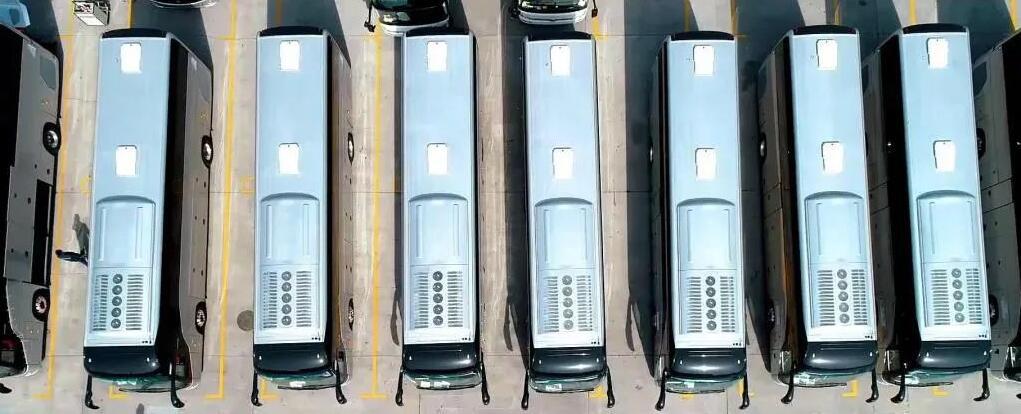
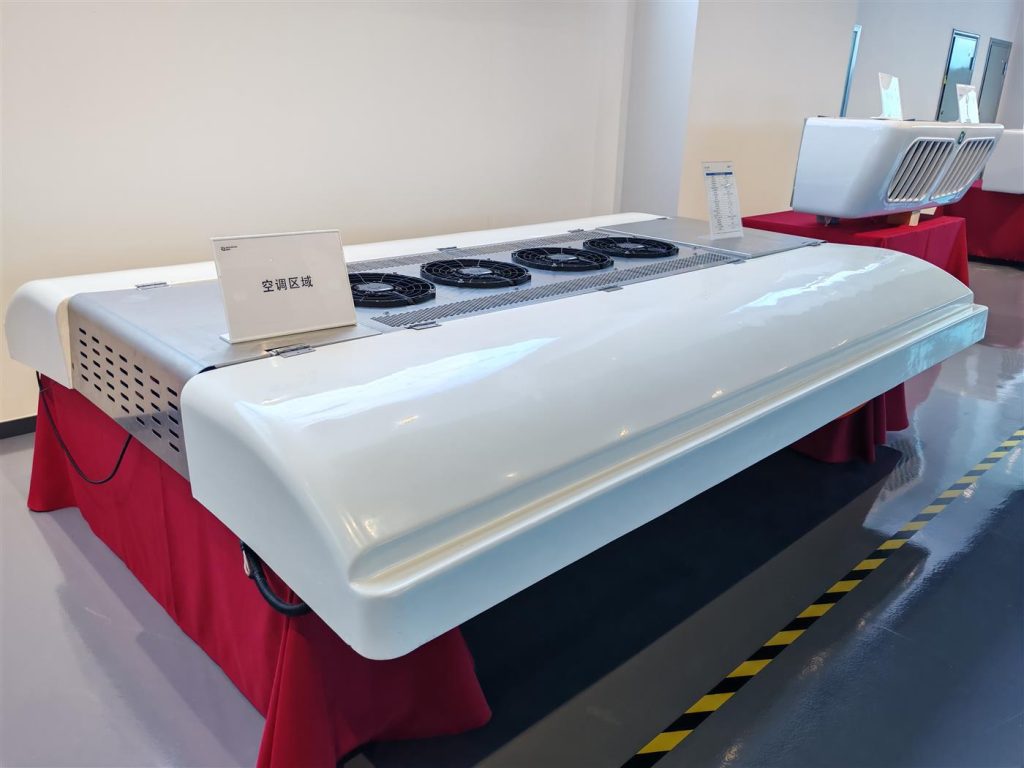
Full DC inverter heat pump air conditioner, suitable for 6 – 12m pure electric buses, hybrid buses and fuel cell buses (basic platform).
Specification
Basic Model
NBEAC-21
NBEAC-24
NBEAC-30
NBEAC-34
Structural Form
Roof-mounted Integrated
Applicable Bus Length(m)
6~7
7~8.5
9~10
10~12
Cooling Capacity(KW)
18
26
30
32
Heating Capacity(Heat Pump )(KW)
20
28
36
38
Evaporator Airflow Volume(M/h3)
3200
3200
4800
7200
Condenser Airflow Volume(M/h3)
4800
6000
8000
1000
Compressor numbers
Single
Single/Dual
Refrigerant
R407C/410A
Size(L*W*H,mm)
2610*1600*270
2500×1920×280
2750*1920*280
3000*1920*270
Unit Weight(kg)
150
230
250
275
Roof-mounted air conditioning and battery thermal management system integration(compact integration) Suitable for pure electric buses, hybrid buses, and fuel cell buses equipped with liquid-cooled batteries, meeting the needs for both air conditioning cooling/heating and battery cooling/heating.
Specification
Basic Model
NBEAC-21-T
NBEAC-24-T
NBEAC-30-T
NBEAC-34-T
Structural Form
Roof-mounted Integrated
Applicable Bus Length(m)
6~7
7~8.5
9~10
10~12
Cooling Capacity(KW)
18
26
30
32
Heating Capacity(Heat Pump )(KW)
20
28
36
38
Battery Side Driving Cooling Capacity (KW)
3/5
3/5
3/5
3/5
Battery Side Charging Cooling Capacity (KW)
5
8
8
8
Evaporator Airflow Volume(M/h3)
3200
3200
4800
7200
Condenser Airflow Volume(M/h3)
4800
6000
8000
1000
Compressor numbers
Single
Single/Dual
Refrigerant
R407C/410A
Size(L*W*H,mm)
2610*1600*270
2500×1920×280
2750*1920*280
3000*1920*280
Unit Weight(kg)
180
260
250
275
Electric Bus HVAC System: Advanced Solutions for Modern Transit
1. Superior Comfort
CFD-Optimized Airflow Design
Utilized computer-aided engineering (CAE) to simulate and optimize air duct performance, ensuring balanced airflow distribution and optimal thermal comfort across the passenger cabin.
European Comfort Curve Integration
Proprietary temperature-humidity control system developed in collaboration with research teams, aligning with EU comfort standards to deliver precision climate management.
Acoustic Engineering Breakthroughs
Optimized evaporator/condenser fan motors and blade geometry, reducing operational noise by 15% (compared to industry averages).
Integrated silencer technology in refrigerant pipelines, minimizing compressor pulse noise and vibration by 22 dB(A).
2. Energy Efficiency
Adaptive Variable Displacement Control
Synergizes variable-capacity compressor technology with PWM fan speed regulation, achieving 18% energy savings during partial-load operations.
Precision Electronic Expansion Valve (EEV)
Dynamically adjusts refrigerant flow based on real-time cabin/ambient temperature differentials, optimizing COP (Coefficient of Performance).
Fuzzy Logic Energy Management
AI-driven algorithm unloads compressors and modulates component speeds during stable conditions, maintaining thermal comfort while reducing power consumption.
Low-Temperature Enhancement
Vapor injection technology resolves heat pump inefficiencies below freezing, delivering 30% lower daily energy use at -10°C versus conventional systems.
3. Safety & Reliability
Multi-Layer Power Protection
DC-DC converter with OVP/OCP/SCP (Over-Voltage/Current/Short-Circuit Protection) ensures safe operation up to 65°C ambient.
High-voltage PTC heaters feature IGBT control with dry-burn prevention and comprehensive fault diagnostics.
Electromagnetic Compatibility (EMC)
360° shielding and equipotential bonding system meets GB/T 18655 Class I standards, ensuring immunity to EV-specific EMI environments.
Supports infrared, Bluetooth 5.0, Wi-Fi 6, and voice command integration for seamless operation across driver/passenger scenarios.
IoT-Enabled Cloud Platform
Real-time telemetry via 4G/5G networks enables predictive maintenance, performance analytics, and remote diagnostics through dedicated PC/mobile apps.
5. Lightweight Architecture
Full DC Inverter System
Reduced compressor-inverter combined weight to 15kg (68% lighter than conventional units), contributing to 30% overall system weight reduction.
Advanced Composite Materials
SMC (Sheet Molding Compound) and LFT-D (Long Fiber Reinforced Thermoplastic Direct) construction cuts component weight by 20% versus steel alternatives.
Modular Framework Design
Condenser assembly optimization achieves 15% weight savings while maintaining structural integrity under vibration testing.

 English
  Español
  Português
  العربية
  Русский
  Français
  Bahasa Indonesia
  日本語
日本語  Română
  Deutsch
  Italiano