
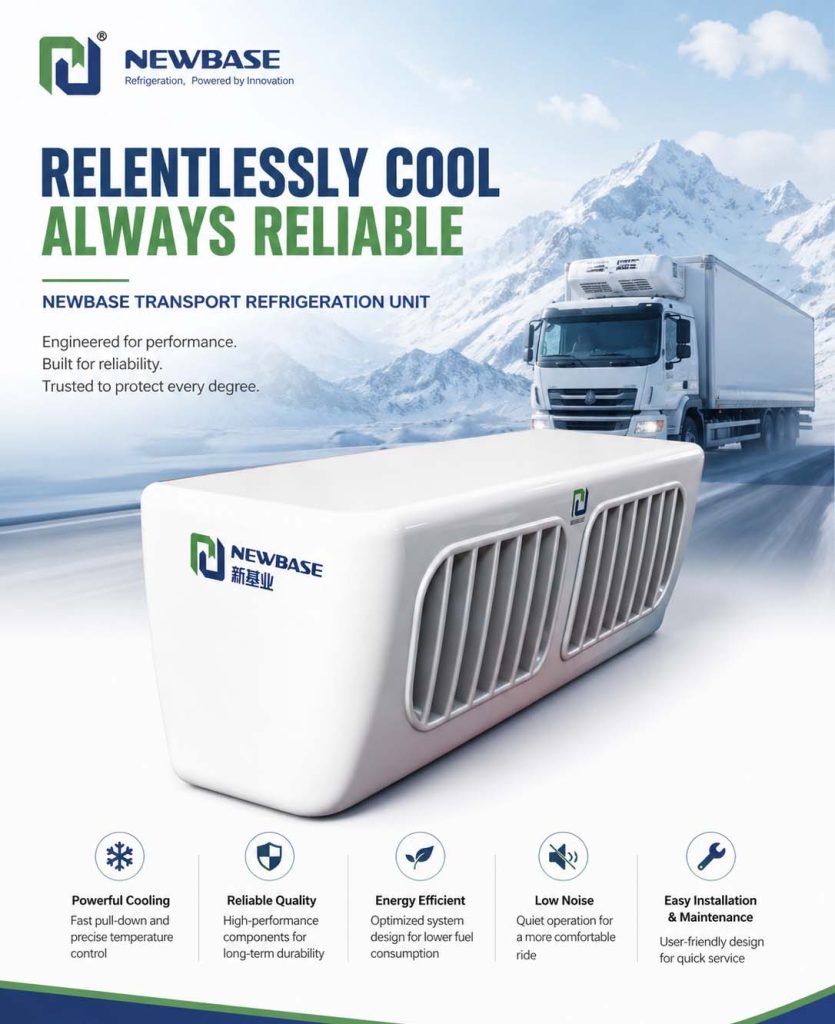
بقلم مختبر NEWBASE للابتكار | نُشر في 30 أبريل 2026 | قراءة 10 دقائق
يمثل التبريد الحديث للنقل الحديث تقاربًا بين العديد من التقنيات المتقدمة، يساهم كل منها في الأداء الكلي للنظام. يشتمل نظام NEWBASE NBASE NESR-1000A على العديد من الابتكارات التقنية الخاصة التي تميزه عن أنظمة التبريد التقليدية وتوفر مزايا قابلة للقياس في الكفاءة وحماية البضائع والموثوقية.
1. تقنية حقن البخار
تحدي الكفاءة في التطبيقات ذات درجات الحرارة المنخفضة
عندما تعمل أنظمة التبريد في درجات حرارة منخفضة جدًا - مثل قدرة NBESR-1000A التي تتراوح بين -18 درجة مئوية إلى -20 درجة مئوية - فإنها تواجه مشكلة أساسية في الكفاءة. فمع انخفاض درجة حرارة التبخير، يصبح الضغط التقليدي أحادي المرحلة غير فعال بشكل متزايد.
حقن البخار: الحل
تحل تقنية حقن البخار هذه المشاكل عن طريق إدخال بخار مبرد إضافي في عملية الضغط:
1. مرحلة الضغط الأولى: يتم ضغط المبرد جزئيًا إلى ضغط وسيط
2. فصل الغاز الوميضي: يتم فصل جزء من غاز التبريد وتبريده
3. الحقن الثانوي: يتم حقن بخار غاز التبريد المبرد هذا في الضاغط
4. ضغط كامل: يكتمل ضغط المبرد المختلط إلى الضغط العالي
الفوائد الديناميكية الحرارية:
| المعلمة | بدون حقن البخار | مع حقن البخار | التحسينات |
| كفاءة الطاقة (COP) | 100% | 120-140% | +20-40% |
| درجة حرارة التفريغ | عالية جداً | معتدل | -15-25°C |
| الكفاءة الحجمية | منخفضة | عالية | +15-25% |
فوائد تطبيقات الشاحنات الكهربائية
بالنسبة إلى تطبيق NBESR-1000A الخاص بالسيارة الكهربائية، توفر تقنية حقن البخار:
- مدى أطول: كفاءة أعلى تعني استهلاك طاقة بطارية أقل
- قدرة تبريد محسّنة: تحافظ على التبريد المقدر حتى في درجات حرارة -20 درجة مئوية تحت الصفر
- تقليل إجهاد الضاغط: تحمي درجات حرارة التفريغ المنخفضة طول العمر الافتراضي
- الفوائد البيئية: تبريد أكثر لكل وحدة كهرباء مستهلكة
2. تقنية حفظ الأيونات السالبة
تحدي النضارة
تستمر المنتجات الطازجة في التنفس وتوليد غاز الإيثيلين حتى بعد الحصاد. وتتسبب فسيولوجيا ما بعد الحصاد هذه في فقدان الجودة أثناء النقل.
تقنية الأيونات السالبة: كيف تعمل
تُنتج مولدات الأيونات السالبة جزيئات الأكسجين المشحونة (O₂-) التي تتفاعل مع الغلاف الجوي لفضاء الشحن: العمل المضاد للميكروبات:
- تلتصق الأيونات السالبة بالبكتيريا وجراثيم العفن المحمولة في الهواء
- أغشية الخلايا المعطلة تمنع نمو الميكروبات
- يؤدي انخفاض الحمل الميكروبي إلى إطالة مدة صلاحية المنتجات
تحلل الإيثيلين:
- تتفاعل الأيونات السالبة مع جزيئات الإيثيلين (C₂H₄H)
- تكسير الإيثيلين إلى مركبات أقل ضررًا
- يبطئ من عمليات النضج والشيخوخة.
الفوائد لأنواع البضائع المختلفة:
| نوع الحمولة | فائدة الأيونات السالبة |
| التوت | نمو أقل للعفن، وفترة صلاحية أطول |
| الفاكهة الحجرية | تباطؤ التليين، والحفاظ على الصلابة |
| الفواكه الاستوائية | تقليل الإصابة بالبرودة، ولون أفضل |
تنفيذ NBESR-1000A
يدمج NBESR-1000A توليد الأيونات السالبة في نظام تدوير الهواء الخاص به:
- وحدة مؤيّن مدمجة: لا حاجة لمكونات خارجية
- تنشيط تلقائي: يعمل عندما يكون التبريد نشطاً
- استهلاك منخفض للطاقة: تأثير ضئيل على نطاق البطارية
- معالجة مستمرة للهواء: حماية مستمرة للنضارة أثناء النقل
3. تنظيم تلقائي لسرعة المروحة
الحاجة إلى تدفق الهواء الذكي
تمثل طاقة المروحة جزءًا كبيرًا من استهلاك طاقة نظام التبريد - عادةً ما يتراوح بين 15-251 تيرابايت إلى 3 تيرابايت من إجمالي استخدام الطاقة. تعمل الأنظمة التقليدية على تشغيل المراوح بسرعات ثابتة بغض النظر عن الطلب الفعلي على التبريد.
تحكم ذكي في سرعة المروحة
يستخدم NBESR-1000A تحكمًا في المروحة متغير السرعة متعدد المراحل يضبط تدفق الهواء ليتناسب مع المتطلبات الفعلية: استراتيجية التحكم:
| وضع التشغيل | سرعة المروحة | حالة الزناد |
| تبريد عادي | متوسطة (60-80%) | درجة الحرارة تقترب من نقطة الضبط |
| الصيانة | منخفضة (30-50%) | درجة الحرارة مستقرة عند نقطة الضبط |
| الاستعداد | الحد الأدنى (10-20%) | المركبة ثابتة، مع الحفاظ على درجة الحرارة |
| إزالة الصقيع | إيقاف التشغيل | دورة التذويب نشطة |
توفير الطاقة من المراوح متغيرة السرعة
| السيناريو | مراوح السرعة الثابتة | NBESR-1000A متغير السرعة NBESR-1000A | المدخرات |
| التوصيل الحضري | 100% دائمًا | متوسط 40-60% | 40-60% طاقة المروحة 40-60% |
| التشغيل الليلي | 100% دائمًا | 30-50% متوسط 30-50% | طاقة المروحة 50-70% |
يمكن أن تقلل مراوح NBESR-1000A ذات السرعة المتغيرة من الضوضاء بمقدار 5-10 ديسيبل (A) خلال فترات انخفاض الطلب.
4. حماية بدء التشغيل بدرجة حرارة منخفضة للغاية
تحدي الطقس البارد
غالباً ما تواجه أنظمة التبريد في السيارات الكهربائية ظروف بدء تشغيل السيارات الكهربائية في درجات حرارة شديدة البرودة:
- إيقاف السيارة في الهواء الطلق في الأجواء الشتوية
- مقصورات باردة مبللة بالبرودة بعد الوقوف لفترات طويلة
- زيادة سماكة زيت الضاغط في درجات الحرارة المنخفضة
نظام NBESR-1000A للحماية من البرد NBESR-1000A
1. التسخين المسبق الذكي:
- سخان حوض الزيت: يحافظ على زيت الضاغط في اللزوجة المثلى
- تحكم ثرموستاتي: يتم تنشيطه عند الحاجة فقط
- تصميم منخفض الطاقة: الحد الأدنى من استنزاف البطارية أثناء التسخين المسبق
2. تقنية بدء التشغيل الناعم:
- ارتفاع تدريجي للجهد الكهربائي: يمنع توقف المحرك عن العمل
- عزم دوران منخفض عند بدء التشغيل: يخفف الضغط الميكانيكي
- تسارع متحكم به: يطيل عمر الضاغط
3. تحكم في درجة الحرارة المعوضة:
- تأخير ممتد لبدء التشغيل: يسمح للزيت بالتسخين قبل التحميل الكامل
- زيادة السعة تدريجياً: زيادة التبريد ببطء
- تحسين المراقبة: أجهزة استشعار إضافية أثناء التشغيل البارد
مواصفات الأداء في الطقس البارد:
| الحالة | الضاغط القياسي | NBESR-1000A المحمي |
| -20 درجة مئوية محيطة | لن تبدأ | بدء التشغيل المضمون |
| وقت بدء التشغيل عند درجة حرارة -20 درجة مئوية تحت الصفر | 30-60 ثانية | 10-15 ثانية |
| استهلاك البطارية | عالية (محاولات متعددة) | مُحسّن |
الخاتمة: الابتكار في العمل
تمثل الابتكارات التقنية في NBESR-1000A الابتكارات التقنية لـ NEWBASE التزام NEWBASE بتطوير تكنولوجيا تبريد النقل:
- حقن البخار يوفر 20-40% كفاءة أفضل في درجات حرارة التجميد العميق
- يعمل حفظ الأيونات السالبة على إطالة مدة صلاحية المنتجات بشكل طبيعي
- يعمل التحكم التلقائي في المروحة على تحسين استخدام الطاقة وتقليل الضوضاء
- تضمن الحماية عند بدء التشغيل البارد الموثوقية في أي مناخ
وتوفر هذه التقنيات، المدمجة في نظام واحد مصمم لهذا الغرض، الأداء والكفاءة والموثوقية التي يتطلبها التبريد الكهربائي الحديث للشاحنات الخفيفة.
نبذة عن NEWBASE: تستثمر NEWBASE بكثافة في البحث والتطوير لتطوير تقنيات خاصة تعالج تحديات العالم الحقيقي في مجال تبريد وسائل النقل. المراجع:
1. كتيب ASHRAE - فصل نظام التبريد عن الضغط على مرحلتين
2. جامعة فلوريدا IFAS - الإيثيلين في مناولة ما بعد الحصاد
3. كارير ترانسيكولد - تقنية المروحة متغيرة السرعة
4. إيمرسون - حماية بدء تشغيل الضاغط على البارد
 العربية
  English
  Español
  Português
  Русский
  Français
  Bahasa Indonesia
  日本語
日本語  Română
  Deutsch
  Italiano