
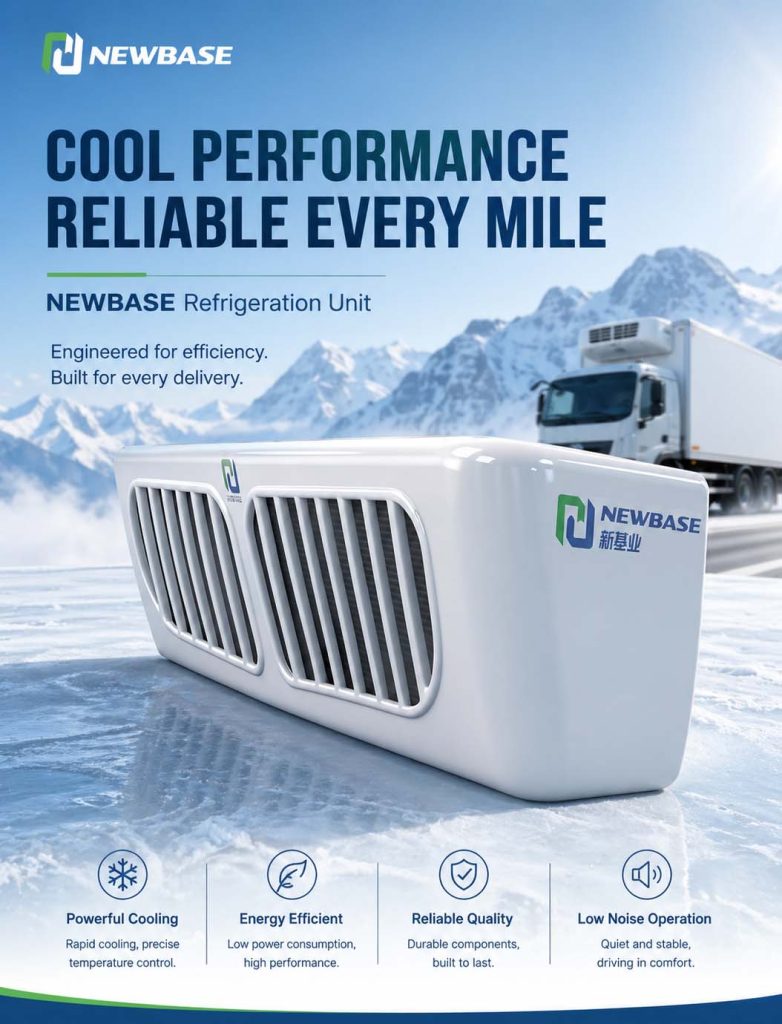
Oleh Tim Teknik Elektronika NEWBASE | Diterbitkan 30 April 2026 | 10 menit dibaca
Kinerja NEWBASE NBESR-1000A tidak berasal dari komponen individual saja - kinerja ini muncul dari arsitektur elektronik terintegrasi yang menghubungkan setiap subsistem menjadi satu kesatuan yang kohesif. Dari penggerak frekuensi variabel yang mengontrol kompresor hingga platform cloud IoT yang memantau operasi armada, setiap sistem elektronik dirancang untuk bekerja sama dengan mulus. Artikel ini membahas empat pilar keunggulan sistem NBESR-1000A: Kontrol frekuensi variabel DC, integrasi bus CAN, kualitas manufaktur elektronik, dan kemampuan platform cloud IoT.
1. Sistem Kontrol Frekuensi Variabel DC Penuh (Inverter)
Keuntungan Frekuensi Variabel
Pendinginan transportasi tradisional menggunakan kompresor berkecepatan tetap yang beroperasi pada satu kecepatan - baik dalam keadaan hidup atau mati sepenuhnya. Pendekatan biner ini memiliki keterbatasan yang melekat:
- Perubahan suhu: variasi ±2-5°C sebagai siklus sistem
- Pemborosan energi: Daya penuh terlepas dari kebutuhan pendinginan yang sebenarnya
- Tekanan mekanis: Bersepeda hidup/mati secara konstan membuat komponen aus
- Polusi suara: Pengoperasian kecepatan penuh terdengar bising
Sistem kontrol frekuensi variabel DC penuh NBESR-1000A menghilangkan masalah ini melalui modulasi kontinu.
Cara Kerja Kontrol Frekuensi Variabel
Penggerak frekuensi variabel (VFD) mengontrol kecepatan motor listrik AC dengan menyesuaikan frekuensi dan tegangan yang disuplai ke motor: Formula Kontrol Kecepatan:
Kecepatan Motor (RPM) = (120 × Frekuensi) / Jumlah Kutub
Dengan mengurangi frekuensi dari 60Hz ke 30Hz, kecepatan motor turun menjadi 50% - tanpa kehilangan mekanis dari gearbox atau penggerak sabuk. Rentang Kontrol NBESR-1000A:
- Rentang kecepatan: 15% hingga 100% dari kecepatan terukur
- Modulasi kapasitas: Penyesuaian berkelanjutan yang mencocokkan beban termal
- Waktu respons: Penyesuaian sub-detik terhadap perubahan permintaan
- Pengurangan energi: Penghematan energi hingga 40% vs. sistem kecepatan tetap
Keuntungan Khusus Frekuensi Variabel DC
Untuk aplikasi kendaraan listrik, kontrol frekuensi variabel DC menawarkan manfaat yang unik: Masukan DC langsung:
- Tidak diperlukan inverter AC: Sambungan langsung ke sistem 48V kendaraan
- Elektronik yang disederhanakan: Tahap konversi daya yang lebih sedikit
- Efisiensi yang lebih tinggi: Tidak ada kerugian konversi AC/DC
- Mengurangi panas: Lebih sedikit limbah panas dari elektronik daya
Kompatibilitas Baterai:
- Operasi nominal 48V: Kompatibel dengan sistem kelistrikan truk ringan
- Kisaran tegangan yang lebar: Beroperasi dari 40V hingga 60V tanpa perubahan performa
- Sinergi pengereman regeneratif: Dapat memanfaatkan energi yang dipulihkan
- Integrasi manajemen baterai: Berkoordinasi dengan BMS kendaraan
Kecerdasan Algoritma Kontrol
Sistem kontrol NBESR-1000A menggunakan algoritme yang canggih untuk kinerja yang optimal: Pencocokan Kapasitas Adaptif:
1. Monitor: Sensor suhu, transduser tekanan, tegangan, arus
2. Menghitung: Kapasitas pendinginan yang diperlukan berdasarkan beban termal
3. Memprediksi: Mengantisipasi perubahan beban dari peristiwa pintu, kondisi sekitar
4. Sesuaikan: Memodulasi kecepatan kompresor agar sesuai dengan permintaan yang diprediksi
5. Verifikasi: Konfirmasikan respons suhu dan sesuaikan jika perlu
Fitur Kontrol Utama:
- Perlindungan anti-siklus pendek: Mencegah kompresor bersepeda <5 menit
- Pengaturan setpoint: Perubahan bertahap mencegah guncangan termal
- Pembatasan permintaan: Berkoordinasi dengan manajemen baterai kendaraan
- Mode malam/tenang: Pengurangan kebisingan otomatis selama jam yang diizinkan
2. Integrasi CAN2.0B dan SAE J1939
Mengapa Bus CAN Penting dalam Kendaraan Komersial
Kendaraan komersial modern menggunakan bus Controller Area Network (CAN) sebagai standar untuk komunikasi elektronik. Awalnya dikembangkan oleh Bosch untuk aplikasi otomotif, CAN bus memungkinkan:
- Penyederhanaan kabel: Bus tunggal menggantikan beberapa kabel khusus
- Komunikasi yang andal: Pensinyalan diferensial tahan terhadap gangguan
- Pemrosesan terdistribusi: Beberapa ECU berbagi informasi
- Protokol standar: Interoperabilitas antar produsen
Implementasi NBESR-1000A CAN
NBESR-1000A mengimplementasikan lapisan fisik CAN2.0B dengan protokol SAE J1939: Spesifikasi CAN2.0B:
- Kecepatan data: 250 kbps (standar untuk kendaraan komersial)
- Format bingkai: Pengenal 29-bit (bingkai yang diperluas)
- Muatan: Hingga 8 byte per pesan
- Deteksi kesalahan: Checksum CRC, isian bit, pemeriksaan bingkai
Protokol SAE J1939: SAE J1939 mendefinisikan pesan standar untuk komunikasi kendaraan komersial:
| Parameter J1939 | Implementasi NBESR-1000A |
| PGN 65262 (Tangki Cairan Buangan Diesel Aftertreatment) | Dicadangkan untuk ekspansi di masa depan |
| PGN 65263 (Cairan Buangan Diesel Aftertreatment 1) | Dicadangkan untuk ekspansi di masa depan |
| PGN 64981 (Pengontrol Transmisi Elektronik) | Berkoordinasi dengan transmisi untuk kontrol PTO |
| Hak Milik PGN | Parameter yang ditentukan NEWBASE untuk kontrol NBESR |
Fungsi Kendaraan Terintegrasi
Integrasi CAN memungkinkan koordinasi yang mulus dengan truk ringan listrik: Pemantauan Status Mesin/Motor:
- Pengoperasian kompresor disinkronkan dengan status kendaraan
- Pematian otomatis ketika kendaraan memasuki kondisi yang tidak sah
- Aktivasi siaga saat diparkir dengan daya AC tersambung
Antarmuka Manajemen Baterai:
- Melaporkan konsumsi daya pendinginan ke BMS kendaraan
- Menerima status pengisian daya baterai untuk pembatasan permintaan
- Mengkoordinasikan pengisian daya dengan kebutuhan pemeliharaan suhu
Integrasi Pematian Jarak Jauh:
- Menanggapi perintah pematian darurat kendaraan
- Terintegrasi dengan sistem anti-pencurian armada
- Mendukung penonaktifan jarak jauh untuk keamanan
Kemampuan Diagnostik
J1939 juga memungkinkan diagnostik yang komprehensif: Kode Masalah Diagnostik Standar (DTC):
- Kode yang ditentukan SAE untuk kesalahan pendinginan yang umum
- Kompatibel dengan alat diagnostik standar
- Integrasi sistem manajemen armada
Diagnostik Hak Milik NEWBASE:
- Informasi diagnostik yang diperluas melalui PGN eksklusif
- Parameter kinerja waktu nyata
- Isolasi kesalahan tingkat komponen
3. Manufaktur Elektronika Level 3 IPC
Mengapa Kualitas Elektronik Penting
Pengontrol pendingin beroperasi di lingkungan yang keras:
- Suhu ekstrem: -40°C hingga +85°C rentang operasional
- Getaran: Tekanan mekanis yang konstan dari pengoperasian kendaraan
- Kelembaban: Kelembaban dari kargo, cuaca, dan siklus pencairan
- Kebisingan listrik: Gangguan dari sistem kendaraan
Barang elektronik di bawah standar mengalami kerusakan sebelum waktunya, menyebabkan kerusakan yang mahal dan kerugian kargo.
Ikhtisar Standar IPC
Institute for Printed Circuits (IPC) menetapkan standar manufaktur elektronik:
| Tingkat IPC | Aplikasi Target | Persyaratan |
| Level B | Layanan Khusus | Peralatan industri |
| Tingkat C | Kinerja Kritis | Otomotif, medis, kedirgantaraan |
Kepatuhan NBESR-1000A IPC Level 3
Rakitan elektronik NBESR-1000A memenuhi persyaratan IPC Level 3 untuk aplikasi otomotif yang kritis: Persyaratan Manufaktur:
| Persyaratan | Standar IPC Level 3 | Kepatuhan NBESR-1000A |
| Penempatan komponen | Hasil pertama 99% | Tercapai |
| Profil aliran ulang | Peningkatan suhu yang tepat | Terkendali |
| Inspeksi visual | Inspeksi otomatis 100% | Diterapkan |
| Pemeriksaan sinar-X | Untuk BGA dan paket yang kompleks | Tersedia |
| AOI (Optik Otomatis) | Inspeksi beberapa sudut | Diterapkan |
Kinerja Lingkungan:
| Uji Lingkungan | Persyaratan IPC | Hasil NBESR-1000A |
| Kejutan termal | -40°C hingga +125°C, 500 siklus | Lulus |
| Getaran | 5-500 Hz, 20G | Lulus |
| Bias kelembaban | 85°C/85%RH, 1000 jam | Lulus |
| Guncangan mekanis | 1500G, 0,5ms | Lulus |
Fitur Desain yang Mendukung Keandalan:
- Komponen dengan suhu yang luas: Dinilai untuk -40°C hingga +125°C
- Jalur arde yang berlebihan: Beberapa koneksi untuk toleransi kesalahan
- Konektor yang dilindungi: Disegel dari masuknya kelembapan
- lapisan konformal: Lapisan pelindung pada papan sirkuit
- Menghilangkan stres: Pemasangan mekanis mengurangi ketegangan pada sambungan solder
Dampak Jaminan Kualitas
Kepatuhan IPC Level 3 diterjemahkan ke dalam manfaat nyata:
- Masa pakai yang lebih lama: Komponen yang dinilai untuk masa pakai kendaraan
- Mengurangi kegagalan di lapangan: <Target tingkat kegagalan tahunan sebesar 0,5%
- Jangkauan pengoperasian yang lebih luas: Pengoperasian yang andal dalam iklim ekstrem
- Performa yang konsisten: Pengulangan dari unit ke unit
4. Integrasi Platform Cloud IoT
Keuntungan Pendinginan yang Terhubung
Layanan pendinginan tradisional bersifat reaktif - masalah ditemukan ketika kargo sudah berisiko. Pendinginan terkoneksi memungkinkan layanan proaktif yang mencegah masalah sebelum mempengaruhi operasi.
Arsitektur IoT NBESR-1000A
NBESR-1000A menyertakan modul komunikasi 4G built-in yang menyediakan konektivitas berkelanjutan: Aliran Komunikasi:
[Pengontrol NBESR-1000A] │ │ Serial/CAN ▼ [Modul 4G Internal] │ │ Jaringan Seluler ▼ [Platform Cloud IoT NEWBASE] │ ├──► Dasbor Manajer Armada ├──► Pusat Layanan NEWBASE └──► Integrasi ERP / WMS Pelanggan
Kemampuan Platform Cloud
1. Dasbor Pemantauan Waktu Nyata:
- Tampilan suhu langsung untuk setiap kendaraan dalam armada
- Grafik tren suhu (tampilan per jam, harian, mingguan)
- Ikhtisar status peringatan: Peringatan dan alarm kritis yang disorot
- Tampilan geografis: Lokasi kendaraan di peta dengan status suhu
- Pemutaran sejarah: Meninjau operasi sebelumnya
2. Pencatatan Suhu Otomatis:
- Perekaman terus menerus pada interval 60 detik
- Dokumentasi yang sesuai dengan GDP/HACCP
- Penyimpanan yang tahan terhadap kerusakan: Catatan tidak dapat diubah
- Laporan otomatis: Ringkasan harian, mingguan, bulanan
- Kemampuan ekspor: PDF, Excel, integrasi API langsung
3. Analisis Data Besar:
Platform ini menganalisis data operasional untuk:
| Fungsi Analisis | Manfaat |
| Pemeliharaan prediktif | Memperkirakan kegagalan komponen sebelum terjadi |
| Analisis rute | Menghubungkan kinerja suhu dengan rute |
| Konsumsi energi | Melacak efisiensi di seluruh armada |
| Korelasi kualitas kargo | Menghubungkan peristiwa suhu dengan hasil kargo |
4. Diagnostik Jarak Jauh:
- Melihat parameter dari jarak jauh: Melihat semua pengaturan tanpa mengunjungi kendaraan
- Perubahan konfigurasi: Menyesuaikan pengaturan tanpa akses fisik
- Pembaruan firmware: Meningkatkan perangkat lunak dari jarak jauh
- Optimalisasi kinerja: Menyempurnakan berdasarkan data penggunaan aktual
5. Sistem Peringatan Dini Gangguan (Fault Early Warning System):
Analisis yang didukung AI mengidentifikasi masalah potensial:
- Tren penyimpangan suhu: Mendeteksi penurunan performa secara bertahap
- Anomali konsumsi daya: Mengidentifikasi masalah efisiensi
- Indikator tegangan komponen: Memperingatkan sebelum terjadi kegagalan
- Pola pengurasan baterai: Menandai konsumsi daya yang berlebihan
Integrasi Manajemen Armada
Konektivitas Sistem Perusahaan:
- RESTful API: Integrasi yang mudah dengan sistem yang sudah ada
- Konektor SAP/Oracle: Tersedia untuk platform ERP utama
- Integrasi WMS: Menghubungkan data suhu ke catatan pengiriman
- Platform analisis: Ekspor ke Power BI, Tableau, dll.
Manajemen Multi-Angkutan:
- Akses berbasis peran: Tampilan yang berbeda untuk operator, layanan, manajemen
- Isolasi penyewa: Pemisahan yang aman di antara para pelanggan
- Arsitektur yang dapat diskalakan: Mendukung dari 1 hingga 10.000+ unit
Aplikasi Seluler
Aplikasi Armada NEWBASE:
- Aplikasi asli iOS dan Android
- Pemberitahuan push: Peringatan langsung pada kunjungan suhu
- Dasbor suhu: Status armada waktu nyata
- Antarmuka pengemudi: Tampilan yang disederhanakan untuk pengemudi pengiriman
- Penjadwalan layanan: Pesan perawatan dari aplikasi
Kesimpulan: Keunggulan Sistem Terpadu
Empat pilar sistem NBESR-1000A bekerja bersama:
- Kontrol DC VFD menghasilkan pendinginan yang tepat dan efisien
- Integrasi CAN/J1939 memastikan komunikasi kendaraan yang mulus
- Elektronik IPC Level 3 menjamin keandalan
- Platform cloud IoT memungkinkan manajemen armada yang proaktif
Bersama-sama, mereka menciptakan sistem pendingin yang lebih besar dari jumlah bagian-bagiannya - yang melindungi kargo, melayani operator armada, dan terintegrasi dengan mulus ke dalam operasi logistik modern.
Tentang NEWBASE: NEWBASE menggabungkan keahlian elektronik otomotif dengan komputasi awan untuk memberikan solusi pendinginan terkoneksi yang mengubah cara armada mengelola operasi rantai dingin. Referensi:
1. Standar SAE International - J1939 untuk Sistem Kelistrikan Kendaraan Komersial
2. IPC - Standar Manufaktur Elektronik (IPC-A-610, IPC-7711)
3. ISO 14943 - Kendaraan Jalan Raya - Komunikasi Sistem Diagnostik
4. Pedoman PDB UE - Persyaratan Pencatatan Data Rantai Dingin
5. Dokumentasi Teknis Platform IoT NEWBASE
 Bahasa Indonesia
  English
  Español
  Português
  العربية
  Русский
  Français
  日本語
日本語  Română
  Deutsch
  Italiano