
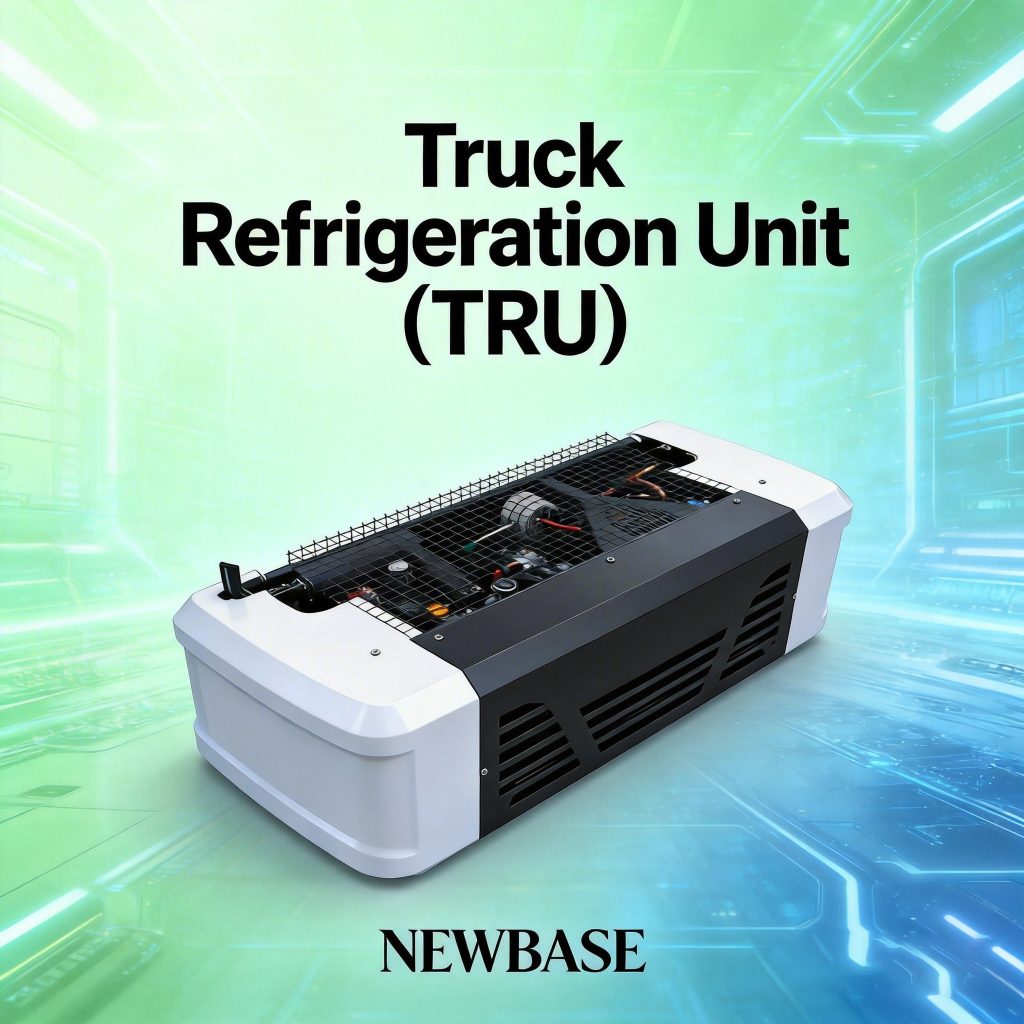
By NEWBASE Pharmaceutical Solutions Team | Published April 30, 2026 | 14 min read
The global pharmaceutical cold chain logistics market is experiencing unprecedented growth, driven by the expanding distribution of mRNA vaccines, monoclonal antibodies, cell and gene therapies, and other biologics that require precision temperature control throughout the supply chain. According to market analysis from Yahoo Finance (2025), the North America pharmaceutical cold chain segment is projected to grow at a compound annual rate exceeding 12% through 2033, making it one of the fastest-growing segments in the broader cold chain industry.
For transport operators, pharmaceutical cold chain represents both an opportunity and a challenge: the cargo is extraordinarily valuable (some shipments exceed $1 million per pallet), the temperature requirements are stringent, and the regulatory consequences of failure are severe. This article examines how NEWBASE transport refrigeration units are engineered to meet these demanding requirements.
Understanding Pharmaceutical Temperature Requirements
Unlike food products, which have relatively broad acceptable temperature ranges, pharmaceutical products often require narrow, specific temperature bands to maintain efficacy and patient safety.
Common Pharmaceutical Temperature Ranges
| Kategori | Kisaran Suhu | Common Products |
| Ambient | 15-25°C | Tablets, capsules, most oral solids |
| Keren. | 8-15°C | Some antibiotics, certain biologics |
| Refrigerated | 2-8°C | Vaccines, insulin, most biologics |
| Cold | 2-5°C | mRNA vaccines, some cell therapies |
| Freezer | -25°C to -10°C | Certain vaccines, enzyme preparations |
| Deep Freeze | -70°C to -60°C | Pfizer/BioNTech COVID-19 vaccine (original) |
“Pharmaceutical cold chain logistics is essential to ensuring the stability and efficacy of temperature-sensitive products. Maintaining the 2-8°C temperature range throughout transportation is critical to preserving drug product integrity.” — CDMO World, Pharmaceutical Cold Chain Logistics 2025
Why 2-8°C Is Critical
The 2-8°C range is the most common pharmaceutical cold chain requirement because it:
- Prevents microbial growth: Temperatures above 8°C allow bacterial proliferation
- Maintains molecular stability: Most proteins and biological molecules degrade at elevated temperatures
- Preserves vaccine efficacy: mRNA and viral vector vaccines are particularly temperature-sensitive
- Meets regulatory standards: This range satisfies FDA, EMA, and WHO stability requirements for the majority of refrigerated pharmaceutical products
Even brief excursions outside the acceptable range can compromise product efficacy. According to WHO stability guidelines, some vaccines lose significant potency after exposure to temperatures above 8°C for just 2-4 hours.
The Stakes of Pharmaceutical Cold Chain Failure
The consequences of cold chain failure in the pharmaceutical industry extend far beyond product loss:
Financial Impact
- Direct product loss: A single pallet of biologics can be worth $500,000 to $2,000,000
- Replacement costs: Rush resupply for critical medications can cost 5-10x normal prices
- Regulatory penalties: FDA Warning Letters and import alerts can halt distribution for months
- Product liability: Compromised medications that reach patients can result in million-dollar lawsuits
Reputational Impact
- Pharmaceutical manufacturer: Loss of trust with healthcare providers and patients
- Transport operator: Removal from approved carrier lists, permanent contract termination
- Healthcare provider: Patient safety concerns, adverse event investigations
Regulatory Impact
- Product seizure: Non-compliant shipments are typically quarantined and destroyed
- GDP certification revocation: Transport operators can lose GDP certification
- FDA/EMA import bans: Non-compliant facilities may be barred from key markets
NEWBASE Engineering for Pharmaceutical Compliance
Precision Temperature Control Architecture
NEWBASE units designated for pharmaceutical transport feature a multi-layered temperature control architecture designed to maintain the 2-8°C range with exceptional consistency:
Layer 1 — Primary Control: Variable-capacity compressor adjusts cooling output in real-time based on cargo temperature sensor feedback. NEWBASE modulating technology maintains temperature within ±0.5°C of setpoint under normal operating conditions.
Layer 2 — Redundant Sensing: NEWBASE pharmaceutical units feature 3 independent temperature probes per compartment, providing:
- Continuous comparison between sensors
- Automatic detection of probe failure
- Averaged temperature readings for control decisions
- Compliant multi-point temperature documentation
Layer 3 — Reserve Capacity: NEWBASE units maintain 25% additional cooling capacity beyond normal requirements, ensuring that unexpected thermal loads (such as loading warm product) do not cause temperature excursions.
Layer 4 — Continuous Monitoring: All temperature data is logged at 60-second intervals with automatic cloud upload, providing complete temperature records for every minute of transport.
Advanced Heat Management
Pharmaceutical transport faces unique thermal challenges that NEWBASE engineers have specifically addressed:
Ambient Temperature Extremes: NEWBASE units maintain temperature control in ambient conditions from -30°C to +55°C, ensuring reliable performance in extreme climates ranging from Arctic deliveries to desert operations.
Solar Load Management: The cargo box experiences significant solar heating during daylight hours. NEWBASE’s thermal load calculation algorithms continuously adjust cooling output to compensate for these predictable variations.
Door Opening Events: Loading and unloading operations cause temperature spikes. NEWBASE units feature rapid pull-down capability that restores target temperature within 15 minutes of door closure.
IoT-Enabled Pharmaceutical Monitoring
NEWBASE IoT platforms for pharmaceutical transport go beyond basic temperature logging to provide the comprehensive monitoring required by pharmaceutical regulations:
Real-Time Temperature Visibility
Every NEWBASE pharmaceutical unit transmits temperature data to the NEWBASE Pharma Connect cloud platform in real-time. Fleet managers can:
- View current temperature of every vehicle on a single dashboard
- See temperature trends over the past hour, day, or week
- Receive immediate alerts when temperature approaches tolerance limits
- Access historical data for any shipment, any date
“IoT sensors provide real-time monitoring of temperature, humidity, and location, allowing operators to detect deviations instantly, take corrective action and maintain regulatory compliance.” — TempControlPack, Cold Chain Logistics Trends 2025
Regulatory Documentation Suite
The NEWBASE Pharma Connect platform generates compliance documentation that meets or exceeds the requirements of:
| Regulation | Persyaratan | NEWBASE Capability |
| FDA 21 CFR Bagian 11 | Electronic records, audit trails | Automated compliant records |
| EU GDP Chapter 3 | Temperature excursion investigation | Incident report templates |
| WHO TRS 961 Annex 9 | Cold chain equipment qualification | DQ/IQ/OQ documentation |
| PIC/S PE 011 | Cold chain distribution audit | Full shipment documentation |
| IATA TAPA | Air freight pharmaceutical | Air cargo compliant logging |
Alert Escalation Protocols
When a temperature deviation occurs, NEWBASE systems follow escalation protocols designed to meet pharmaceutical quality requirements:
- Level 1 — Driver Alert: Immediate SMS and app notification to driver
- Level 2 — Dispatch Alert: Notification to operations center with incident details
- Level 3 — Quality Alert: Notification to quality assurance team for impact assessment
- Level 4 — Management Alert: Escalation to senior management for significant excursions
Each alert includes a complete data package: temperature graph, location, timestamp, duration, and preliminary corrective actions.
Qualification and Validation Support
Unlike food transport, pharmaceutical cold chain requires formal qualification and validation of transport equipment and processes. NEWBASE supports customers through:
Equipment Qualification Documentation
- Design Qualification (DQ): Detailed specifications, engineering drawings, material specifications
- Installation Qualification (IQ): Verification of proper installation per design specifications
- Operational Qualification (OQ): Testing of unit performance across specified operating ranges
- Performance Qualification (PQ): Ongoing verification of consistent performance under actual use conditions
Temperature Mapping Studies
NEWBASE works with certified temperature mapping providers to conduct:
- Seasonal temperature mapping (summer and winter studies)
- Transit simulation studies replicating actual distribution routes
- Door opening studies quantifying thermal impact of loading/unloading
- Failure mode studies documenting system behavior during simulated failures
Choosing a Pharmaceutical Transport Refrigeration Partner
For pharmaceutical companies and their logistics partners evaluating transport refrigeration options, key evaluation criteria include:
Temperature Control Performance
- What is the control tolerance (not just display accuracy)?
- How does the unit perform during extreme ambient conditions?
- What is the pull-down time after loading warm product?
- Does the unit have reserve cooling capacity?
Monitoring and Documentation
- Does the system provide continuous, automatic data logging?
- Is data stored in a tamper-evident format?
- Can the system generate regulatory-compliant reports?
- Does the platform support electronic signatures for data validation?
Regulatory Credentials
- Does the manufacturer have experience with pharmaceutical industry standards?
- Are qualification documents available in ICH Q10 format?
- Does the service network include GDP-certified technicians?
Business Continuity
- What is the service response time in your operating regions?
- Are spare parts available locally?
- Does the manufacturer provide 24/7 technical support?
- What is the warranty and maintenance structure?
Kesimpulan
The pharmaceutical cold chain is unforgiving. A temperature excursion that would be a minor inconvenience in food transport can result in the loss of life-saving medications worth millions of dollars, regulatory sanctions, and lasting reputational damage.
NEWBASE engineers every aspect of our pharmaceutical transport refrigeration units to meet these demanding requirements. From precision temperature control to compliant documentation to qualification support, we provide pharmaceutical companies and their logistics partners with the confidence that their critical cargo will arrive intact — every time.
As the pharmaceutical industry continues to develop increasingly sophisticated temperature-sensitive therapies, NEWBASE remains committed to advancing transport refrigeration technology to meet the cold chain challenges of tomorrow.
Tentang NEWBASE: NEWBASE is a trusted partner for pharmaceutical cold chain logistics, providing validated transport refrigeration solutions for vaccine distribution, biologic drug transport, and clinical trial supply chain operations worldwide.
References:
- CDMO World — Pharmaceutical Cold Chain Logistics: Ensuring Drug Product Integrity and Compliance, 2025
- TempControlPack — Cold Chain Products in Pharmacy: 2025 Guide & Trends
- TempControlPack — Comprehensive Cold Chain Pharmaceutical Logistics Guide 2025
- Yahoo Finance — North America Cold Chain Market Trends Analysis Report 2025-2033
- FDA — 21 CFR Part 11: Electronic Records; Electronic Signatures
- WHO Technical Report Series 961 (2009), Annex 9: Model Guidance for the Storage and Transport of Time-and Temperature-Sensitive Pharmaceutical Products
 Bahasa Indonesia
  English
  Español
  Português
  العربية
  Русский
  Français
  日本語
日本語  Română
  Deutsch
  Italiano