
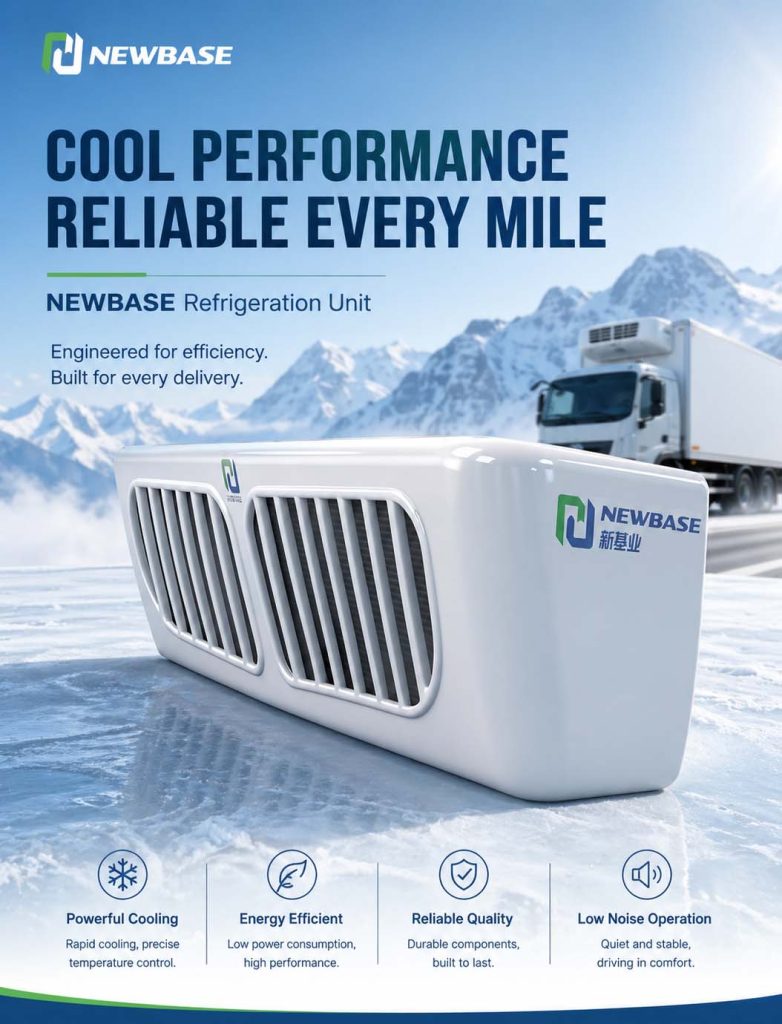
Von NEWBASE Electronics Engineering Team | Veröffentlicht am 30. April 2026 | 10 min lesen
Die Leistung des NEWBASE NBESR-1000A kommt nicht nur von einzelnen Komponenten - sie entsteht durch eine integrierte elektronische Architektur, die jedes Untersystem zu einem zusammenhängenden Ganzen verbindet. Vom Antrieb mit variabler Frequenz, der den Kompressor steuert, bis hin zur IoT-Cloud-Plattform, die den Flottenbetrieb überwacht, ist jedes elektronische System darauf ausgelegt, nahtlos zusammenzuarbeiten. Dieser Artikel befasst sich mit den vier Säulen der NBESR-1000A-Systemexzellenz: Variable DC-Frequenzregelung, CAN-Bus-Integration, Qualität der Elektronikfertigung und IoT-Cloud-Plattform-Funktionen.
1. Vollständige DC-Steuerung mit variabler Frequenz (Wechselrichter)
Der Vorteil der variablen Frequenz
Bei der herkömmlichen Transportkühlung werden Verdichter mit fester Drehzahl eingesetzt, die nur mit einer Geschwindigkeit arbeiten - entweder ganz ein- oder ganz ausgeschaltet. Dieser binäre Ansatz hat inhärente Grenzen:
- Temperaturschwankungen: ±2-5°C Schwankung bei Systemzyklen
- Energieverschwendung: Volle Leistung ungeachtet des tatsächlichen Kühlbedarfs
- Mechanische Belastung: Ständiges An- und Ausschalten verschleißt Komponenten
- Lärmbelästigung: Der Betrieb mit voller Geschwindigkeit ist laut
Das vollständig DC-variable Frequenzsteuerungssystem des NBESR-1000A beseitigt diese Probleme durch kontinuierliche Modulation.
So funktioniert die variable Frequenzsteuerung
Frequenzumrichter (VFD) regeln die Drehzahl von Wechselstrom-Elektromotoren, indem sie sowohl die Frequenz als auch die dem Motor zugeführte Spannung anpassen: Formel für die Drehzahlregelung:
Motordrehzahl (RPM) = (120 × Frequenz) / Anzahl der Pole
Durch die Reduzierung der Frequenz von 60Hz auf 30Hz sinkt die Motordrehzahl auf 50% - ohne die mechanischen Verluste von Getrieben oder Riemenantrieben. NBESR-1000A Regelbereich:
- Geschwindigkeitsbereich: 15% bis 100% der Nenndrehzahl
- Leistungsmodulation: Kontinuierliche Anpassung an die thermische Belastung
- Reaktionszeit: Anpassung an Bedarfsänderungen innerhalb einer Sekunde
- Energieeinsparung: Bis zu 40% Energieeinsparung im Vergleich zu Systemen mit fester Drehzahl
DC Variable Frequenz Spezifische Vorteile
Für Elektrofahrzeuganwendungen bietet die variable DC-Frequenzregelung einzigartige Vorteile: Direkter DC-Eingang:
- Kein AC-Wechselrichter erforderlich: Direkter Anschluss an das 48-Volt-System des Fahrzeugs
- Vereinfachte Elektronik: Weniger Leistungsumwandlungsstufen
- Höherer Wirkungsgrad: Keine AC/DC-Wandlungsverluste
- Geringere Wärme: Weniger Abwärme der Leistungselektronik
Akku-Kompatibilität:
- 48V Nennbetrieb: Kompatibel mit leichten Lkw-Bordnetzen
- Breiter Spannungsbereich: Funktioniert von 40V bis 60V ohne Leistungsänderung
- Synergie beim regenerativen Bremsen: Kann die zurückgewonnene Energie nutzen
- Integration des Batteriemanagements: Koordiniert mit dem BMS des Fahrzeugs
Steuerungsalgorithmus Intelligenz
Das Steuerungssystem des NBESR-1000A verwendet hochentwickelte Algorithmen für optimale Leistung: Adaptive Kapazitätsanpassung:
1. Überwachen: Temperatursensoren, Druckmessumformer, Spannung, Strom
2. Berechnen Sie: Erforderliche Kühlleistung auf der Grundlage der thermischen Belastung
3. Voraussagen: Antizipieren Sie Laständerungen aufgrund von Türereignissen und Umgebungsbedingungen
4. Anpassen: Modulieren der Kompressordrehzahl zur Anpassung an den voraussichtlichen Bedarf
5. Überprüfen: Bestätigen Sie das Temperaturverhalten und passen Sie es gegebenenfalls an.
Wichtige Kontrollfunktionen:
- Anti-Kurzschluss-Schutz: Verhindert, dass der Kompressor < 5 Minuten läuft
- Sollwert-Rampe: Allmähliche Änderungen verhindern thermischen Schock
- Bedarfsbeschränkung: Koordiniert mit dem Batteriemanagement des Fahrzeugs
- Nacht-/Leise-Modus: Automatische Geräuschreduzierung während der erlaubten Stunden
2. Integration von CAN2.0B und SAE J1939
Warum CAN-Bus in Nutzfahrzeugen wichtig ist
Moderne Nutzfahrzeuge verwenden den Controller Area Network (CAN)-Bus als Standard für die elektronische Kommunikation. Ursprünglich von Bosch für Kraftfahrzeuganwendungen entwickelt, ermöglicht CAN-Bus:
- Vereinfachung der Verdrahtung: Ein einziger Bus ersetzt mehrere dedizierte Drähte
- Zuverlässige Kommunikation: Differentialsignalisierung widersteht Störungen
- Verteilte Verarbeitung: Mehrere ECUs teilen Informationen
- Standardprotokolle: Interoperabilität zwischen Herstellern
NBESR-1000A CAN-Implementierung
Der NBESR-1000A implementiert die physikalische Schicht CAN2.0B mit SAE J1939 Protokoll: CAN2.0B Spezifikationen:
- Datenrate: 250 kbps (Standard für Nutzfahrzeuge)
- Rahmenformat: 29-Bit-Bezeichner (erweiterter Rahmen)
- Nutzlast: Bis zu 8 Bytes pro Nachricht
- Fehlererkennung: CRC-Prüfsumme, Bitstuffing, Rahmenprüfungen
SAE J1939-Protokoll: SAE J1939 definiert standardisierte Nachrichten für die Nutzfahrzeugkommunikation:
| J1939-Parameter | NBESR-1000A Implementierung |
| PGN 65262 (Tank für Dieselabgasnachbehandlungsflüssigkeit) | Reserviert für zukünftige Erweiterungen |
| PGN 65263 (Nachbehandlungsmittel 1 Dieselabgasflüssigkeit) | Reserviert für zukünftige Erweiterungen |
| PGN 64981 (Elektronische Getriebesteuerung) | Koordiniert mit dem Getriebe für die PTO-Steuerung |
| Proprietäre PGNs | NEWBASE-definierte Parameter für die NBESR-Kontrolle |
Integrierte Fahrzeugfunktionen
Die CAN-Integration ermöglicht eine nahtlose Koordinierung mit dem elektrischen Kleinlaster: Überwachung des Motor-/Motorstatus:
- Kompressorbetrieb synchronisiert mit dem Fahrzeugzustand
- Automatische Abschaltung, wenn das Fahrzeug in einen unzulässigen Zustand gerät
- Standby-Aktivierung beim Abstellen mit angeschlossenem Netzstrom
Batterie-Management-Schnittstelle:
- Meldet den Stromverbrauch der Kühlung an das Fahrzeug-BMS
- Empfängt den Ladezustand der Batterie zur Bedarfsbegrenzung
- Koordiniert die Aufladung mit dem Bedarf an Temperaturerhaltung
Integration der Fernabschaltung:
- Reagiert auf Befehle zur Notabschaltung von Fahrzeugen
- Integrierbar in Flottendiebstahlsicherungssysteme
- Unterstützt Ferndeaktivierung zur Sicherheit
Diagnostische Fähigkeiten
J1939 ermöglicht auch eine umfassende Diagnose: Standard-Diagnosefehler-Codes (DTCs):
- SAE-definierte Codes für häufige Kältemittel-Fehler
- Kompatibel mit Standard-Diagnosegeräten
- Integration von Flottenmanagementsystemen
NEWBASE Proprietäre Diagnostik:
- Erweiterte Diagnoseinformationen über proprietäre PGNs
- Leistungsparameter in Echtzeit
- Fehlerisolierung auf Komponentenebene
3. IPC Level 3 Elektronikfertigung
Warum Qualität in der Elektronik wichtig ist
Kälteregler arbeiten in rauen Umgebungen:
- Temperaturextreme: -40°C bis +85°C Betriebsbereich
- Vibration: Ständige mechanische Belastung durch den Fahrzeugbetrieb
- Luftfeuchtigkeit: Feuchtigkeit durch Ladung, Wetter und Abtauzyklen
- Elektrisches Rauschen: Interferenzen von Fahrzeugsystemen
Minderwertige Elektronik fällt vorzeitig aus und verursacht kostspielige Ausfälle und Frachtverluste.
IPC Standards Übersicht
Das Institut für gedruckte Schaltungen (IPC) legt Normen für die Elektronikfertigung fest:
| IPC-Stufe | Ziel Anwendung | Anforderungen |
| Stufe B | Engagierter Dienst | Industrielle Ausrüstung |
| Stufe C | Kritische Leistung | Automobilindustrie, Medizintechnik, Luft- und Raumfahrt |
NBESR-1000A erfüllt IPC Stufe 3
Die elektronischen Baugruppen des NBESR-1000A erfüllen die IPC Level 3-Anforderungen für kritische Automobilanwendungen: Fertigungsanforderungen:
| Anforderung | IPC Level 3 Standard | NBESR-1000A Konformität |
| Platzierung der Komponenten | 99% Ertrag im ersten Durchgang | Erreicht |
| Reflow-Profil | Präzise Temperaturrampe | Kontrolliert |
| Visuelle Kontrolle | 100% Automatische Prüfung | Implementiert |
| Röntgeninspektion | Für BGA und komplexe Gehäuse | Verfügbar |
| AOI (Automatisch Optisch) | Mehrwinkelprüfung | Implementiert |
Ökologische Leistung:
| Umweltprüfung | IPC-Anforderung | NBESR-1000A Ergebnis |
| Thermischer Schock | -40°C bis +125°C, 500 Zyklen | Pass |
| Vibration | 5-500 Hz, 20G | Pass |
| Verzerrung der Luftfeuchtigkeit | 85°C/85%RH, 1000 Stunden | Pass |
| Mechanischer Schock | 1500G, 0,5ms | Pass |
Konstruktionsmerkmale zur Unterstützung der Zuverlässigkeit:
- Komponenten für weite Temperaturbereiche: Ausgelegt für -40°C bis +125°C
- Redundante Erdungswege: Mehrere Verbindungen für Fehlertoleranz
- Geschützte Steckverbinder: Versiegelt gegen das Eindringen von Feuchtigkeit
- conformal coating: Schutzschicht auf Leiterplatten
- Stressabbau: Mechanische Montage reduziert die Belastung der Lötstellen
Auswirkungen der Qualitätssicherung
Die Einhaltung der IPC-Stufe 3 bringt Vorteile in der Praxis mit sich:
- Verlängerte Nutzungsdauer: Komponenten für die Lebensdauer des Fahrzeugs ausgelegt
- Geringere Ausfälle im Feld: <0,5% jährliche Ausfallrate als Ziel
- Breiterer Betriebsbereich: Zuverlässiger Betrieb in extremen Klimazonen
- Konsistente Leistung: Wiederholbarkeit von Einheit zu Einheit
4. IoT-Cloud-Plattform-Integration
Der Vorteil von Connected Refrigeration
Der herkömmliche Kälteservice ist reaktiv - Probleme werden erst entdeckt, wenn die Fracht bereits gefährdet ist. Die vernetzte Kühlung ermöglicht einen proaktiven Service, der Probleme verhindert, bevor sie den Betrieb beeinträchtigen.
NBESR-1000A IoT-Architektur
Der NBESR-1000A verfügt über ein eingebautes 4G-Kommunikationsmodul, das kontinuierliche Konnektivität bietet: Kommunikationsfluss:
[NBESR-1000A Controller] │ │ Seriell/CAN ▼ [Eingebautes 4G Modul] │ │ Mobilfunknetz ▼ [NEWBASE IoT Cloud Plattform] │ ├──► Flottenmanager Dashboard ├──► NEWBASE Service Center └──► Kunden ERP/WMS Integration
Fähigkeiten der Cloud-Plattform
1. Echtzeit-Überwachung Dashboard:
- Live-Temperaturanzeige für jedes Fahrzeug im Fuhrpark
- Temperaturtrenddiagramme (stündliche, tägliche und wöchentliche Ansichten)
- Übersicht über den Alarmstatus: Hervorgehobene Warnungen und kritische Alarme
- Geografische Anzeige: Fahrzeugstandorte auf der Karte mit Temperaturstatus
- Historisches Playback: Rückblick auf vergangene Vorgänge
2. Automatisierte Temperaturaufzeichnung:
- Kontinuierliche Aufzeichnung in 60-Sekunden-Intervallen
- GDP/HACCP-konforme Dokumentation
- Manipulationssichere Aufbewahrung: Aufzeichnungen können nicht verändert werden
- Automatisierte Berichte: Tägliche, wöchentliche, monatliche Zusammenfassungen
- Exportmöglichkeiten: PDF, Excel, direkte API-Integration
3. Big Data-Analytik:
Die Plattform analysiert Betriebsdaten, um:
| Analytik-Funktion | Nutzen Sie |
| Vorausschauende Wartung | Prognostiziert Komponentenausfälle, bevor sie auftreten |
| Analyse der Route | Korreliert Temperaturleistung mit Routen |
| Energieverbrauch | Verfolgt die Effizienz der gesamten Flotte |
| Korrelation der Frachtqualität | Verknüpfung von Temperaturereignissen mit Ladungsergebnissen |
4. Ferndiagnose:
- Fernanzeige der Parameter: Sehen Sie alle Einstellungen, ohne das Fahrzeug zu besuchen
- Konfigurationsänderungen: Einstellungen ohne physischen Zugriff anpassen
- Firmware-Aktualisierungen: Software aus der Ferne aktualisieren
- Optimierung der Leistung: Feinabstimmung anhand der tatsächlichen Nutzungsdaten
5. Störungsfrühwarnsystem:
Die KI-gestützte Analyse identifiziert potenzielle Probleme:
- Trends der Temperaturabweichung: Erkennt einen allmählichen Leistungsabfall
- Anomalien beim Stromverbrauch: Identifiziert Effizienzprobleme
- Indikatoren für die Belastung von Bauteilen: Warnt, bevor Ausfälle auftreten
- Batterieverbrauchsmuster: Kennzeichnet übermäßigen Stromverbrauch
Integration von Flottenmanagement
Konnektivität von Unternehmenssystemen:
- RESTful API: Einfache Integration in bestehende Systeme
- SAP/Oracle-Anschlüsse: Verfügbar für die wichtigsten ERP-Plattformen
- WMS-Integration: Verknüpfung von Temperaturdaten mit Sendungsaufzeichnungen
- Analyse-Plattformen: Export zu Power BI, Tableau, etc.
Multi-Fleet Management:
- Rollenbasierter Zugang: Unterschiedliche Ansichten für Betreiber, Service, Management
- Mieterisolierung: Sichere Trennung zwischen Kunden
- Skalierbare Architektur: Unterstützt von 1 bis 10.000+ Einheiten
Mobile Anwendung
NEWBASE Flotten-App:
- Native Anwendungen für iOS und Android
- Push-Benachrichtigungen: Sofortige Warnungen bei Temperaturabweichungen
- Temperatur-Dashboard: Flottenstatus in Echtzeit
- Fahrer-Schnittstelle: Vereinfachte Ansicht für Zustellfahrer
- Wartungsterminierung: Wartung über die App buchen
Schlussfolgerung: Integrierte System-Exzellenz
Die vier Systempfeiler des NBESR-1000A arbeiten zusammen:
- DC-VFD-Steuerung liefert präzise, effiziente Kühlung
- CAN/J1939-Integration gewährleistet nahtlose Fahrzeugkommunikation
- IPC Level 3 Elektronik garantiert Zuverlässigkeit
- IoT-Cloud-Plattform ermöglicht proaktives Flottenmanagement
Zusammen ergeben sie ein Kühlsystem, das mehr ist als die Summe seiner Teile - eines, das die Fracht schützt, Flottenbetreibern dient und sich nahtlos in moderne Logistikabläufe einfügt.
Über NEWBASE: NEWBASE kombiniert Fachwissen im Bereich Automobilelektronik mit Cloud Computing, um vernetzte Kühllösungen anzubieten, die das Kühlkettenmanagement von Flotten verändern. Referenzen:
1. SAE International - J1939 Standard für elektrische Systeme in Nutzfahrzeugen
2. IPC - Normen für die Elektronikfertigung (IPC-A-610, IPC-7711)
3. ISO 14943 - Straßenfahrzeuge - Kommunikation von Diagnosesystemen
4. EU-BIP-Leitlinien - Anforderungen an die Datenaufzeichnung in der Kühlkette
5. NEWBASE IoT-Plattform Technische Dokumentation
 Deutsch
  English
  Español
  Português
  العربية
  Русский
  Français
  Bahasa Indonesia
  日本語
日本語  Română
  Italiano