Actualités

Mitigating Heat Gain Risk: 100mm PUF Insulation for Extended Off-Power Cold Storage in Food Logistics

In the demanding environment of urban and suburban food logistics, the “cold chain” is often at its most vulnerable during transitional periods—loading, unloading, and vehicle downtime. For B2B fleet operators, the primary technical challenge is not just active cooling, but passive thermal resistance. When a delivery vehicle is turned off or faces a power interruption, […]
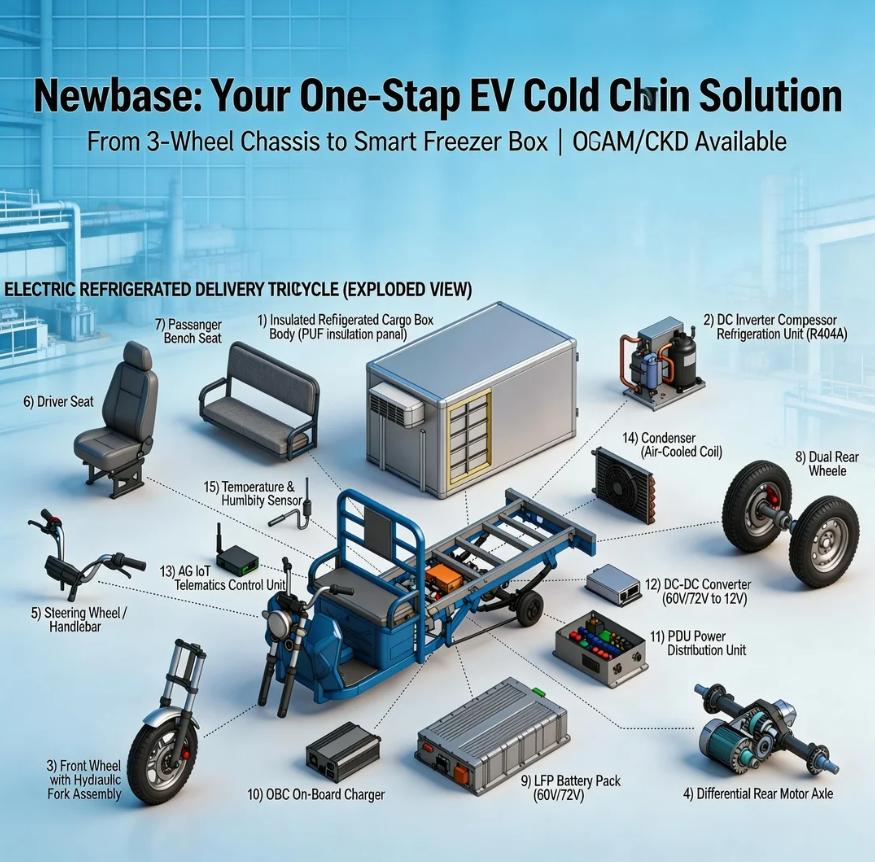
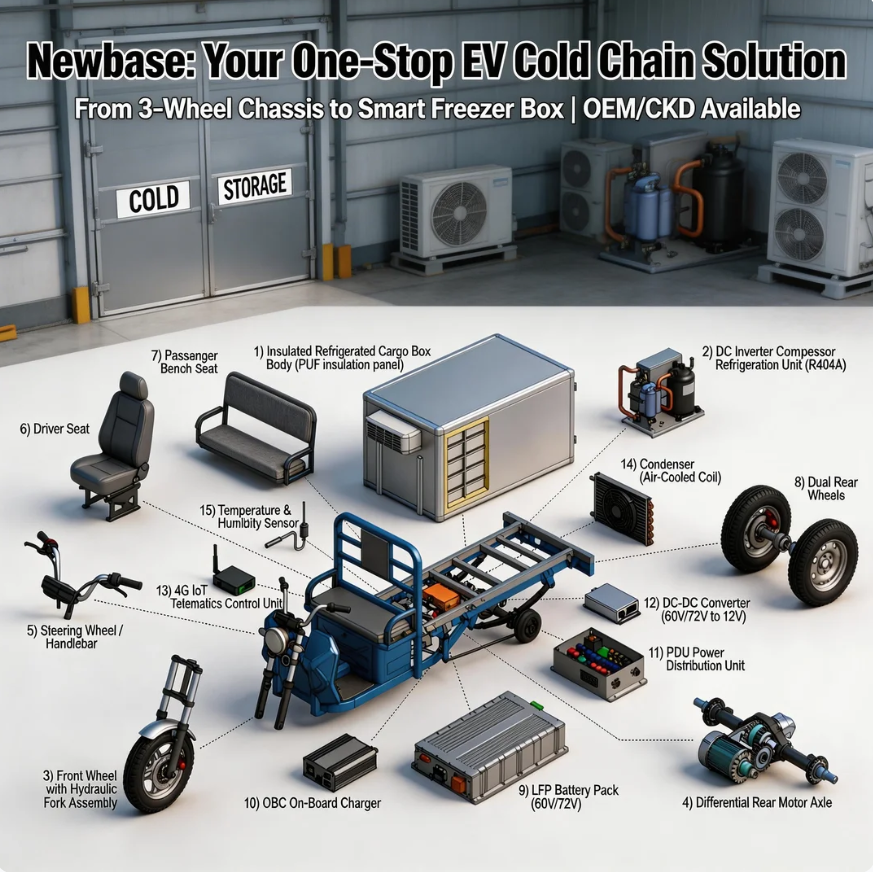
Mitigating Heat Gain Risk: 100mm PUF Insulation for Extended Off-Power Cold Storage in Food Logistics Lire la suite »

Maintaining -25°C Seafood Cold Chain: Deep-Freeze Solutions for Suburban Distribution

In the specialized field of cold chain logistics, the transportation of frozen seafood represents one of the most technically demanding segments. Maintaining a consistent temperature of -25°C (-13°F) is not merely a quality standard; it is a critical safety requirement to prevent cellular degradation and bacterial growth in high-value marine proteins. For B2B distributors serving

Maintaining -25°C Seafood Cold Chain: Deep-Freeze Solutions for Suburban Distribution Lire la suite »

Optimizing Last-Mile Efficiency: Removable Reefer Pods Designed for Multi-Chassis Flexibility

Introduction: The Strategic Shift in Last-Mile Cold Chain In the rapidly evolving landscape of urban logistics, “last-mile” delivery remains the most cost-intensive and complex segment. For B2B fleet operators, the traditional model of dedicated, fixed-body refrigerated tricycles often leads to low asset utilization and high maintenance overheads. The emergence of Removable Reefer Pods (Independent Mobile

Optimizing Last-Mile Efficiency: Removable Reefer Pods Designed for Multi-Chassis Flexibility Lire la suite »

Ensuring Pharmaceutical Integrity: IP67-Rated Refrigeration Systems for High-Humidity Urban Logistics

The “last-mile” delivery of vaccines, insulin, and high-value biologics represents the most critical link in the global pharmaceutical supply chain. Unlike standard food logistics, pharmaceutical distribution requires absolute thermal stability and equipment reliability, particularly when navigating the high-humidity and unpredictable weather of urban environments. For B2B fleet operators, the transition to IP67-rated refrigeration systems is

Ensuring Pharmaceutical Integrity: IP67-Rated Refrigeration Systems for High-Humidity Urban Logistics Lire la suite »

Eliminating Temperature Fluctuation in Community Grocery Delivery with DC Variable Frequency Technology

The “last-mile” delivery of fresh produce and dairy products within urban communities represents one of the most challenging segments of the cold chain. Unlike long-haul transport, community delivery involves frequent door openings and varying traffic conditions, which often lead to significant temperature fluctuations. For B2B fleet operators, maintaining a stable thermal environment is not just

Eliminating Temperature Fluctuation in Community Grocery Delivery with DC Variable Frequency Technology Lire la suite »

Système de gestion thermique de la batterie de 8 kW refroidie par liquide : Plongée technique

Introduction As electric vehicles (EVs) and energy storage systems (ESS) continue to accelerate global energy transition, battery thermal management has become a critical factor determining system performance, longevity, and safety. This article provides a comprehensive technical analysis of 8kW-class liquid-cooled battery thermal management systems (BTMS), based on practical engineering implementation and industry best practices. System

Système de gestion thermique de la batterie de 8 kW refroidie par liquide : Plongée technique Lire la suite »

Protocoles d'assurance qualité et d'essai pour les SMTB refroidis à l'eau

Comprehensive Testing Ensures Water-Cooled BTMS Reliability Quality assurance for commercial vehicle water-cooled BTMS requires rigorous testing across multiple parameters. Manufacturers implement comprehensive test programs that verify performance, durability, and safety before units reach customers. Performance Verification Testing Cooling efficiency testing quantifies heat removal capability under controlled conditions. Test procedures use calibrated heat sources to simulate

Protocoles d'assurance qualité et d'essai pour les SMTB refroidis à l'eau Lire la suite »

Applications du BTMS refroidi à l'eau dans les véhicules commerciaux électriques et le stockage de l'énergie

Industry Applications of Water-Cooled Battery Thermal Management Systems Water-cooled BTMS technology serves diverse applications across commercial transportation and stationary energy storage. Each application presents unique thermal management challenges that inform system selection and integration. Electric Bus Thermal Management Electric buses represent a mature application for water-cooled BTMS. Urban transit buses operate in stop-and-go patterns with

Applications du BTMS refroidi à l'eau dans les véhicules commerciaux électriques et le stockage de l'énergie Lire la suite »

Analyse comparative : Guide de sélection des groupes frigorifiques à eau de 5KW à 16KW

Selecting the Right Water-Cooled BTMS Capacity: A Technical Comparison Choosing the appropriate cooling capacity is fundamental to effective battery thermal management. Water-cooled units range from 5kW to 16kW, with each capacity level suited to specific vehicle types and operational requirements. This article provides a detailed technical comparison to guide selection decisions. Capacity Overview and Target

Analyse comparative : Guide de sélection des groupes frigorifiques à eau de 5KW à 16KW Lire la suite »

Comprendre les systèmes de gestion thermique des batteries refroidies par eau pour les véhicules utilitaires

Water-Cooled BTMS for Commercial Vehicles: A Complete Technical Overview Battery thermal management is critical for electric commercial vehicles. Without proper temperature control, batteries experience reduced performance, accelerated degradation, and potential safety risks. Water-cooled Battery Thermal Management Systems (BTMS) have emerged as the industry standard for managing battery temperatures in demanding commercial vehicle applications. How Water-Cooled

Comprendre les systèmes de gestion thermique des batteries refroidies par eau pour les véhicules utilitaires Lire la suite »

fr_FRFrançais