Actualités

Restez au courant des dernières annonces de NEWBASE, des calendriers des expositions et des événements marquants de l'entreprise.

Multi-Temperature Transport Solutions: How NEWBASE Dual-Zone and Triple-Zone Refrigerated Trucks are Revolutionizing Fleet Efficiency

By NEWBASE Product Development Team | Published April 30, 2026 | 10 min read The economics of refrigerated transport have always favored load optimization — the more cargo a vehicle carries, the lower the per-unit transport cost. Yet for decades, fleet operators faced a painful choice: dedicate vehicles to single temperature ranges (accepting wasted capacity when […]

Multi-Temperature Transport Solutions: How NEWBASE Dual-Zone and Triple-Zone Refrigerated Trucks are Revolutionizing Fleet Efficiency Lire la suite »

IoT-Enabled Refrigerated Truck Units: How Smart Temperature Monitoring is Transforming Cold Chain Logistics in 2026

IoT-Enabled Refrigerated Truck Units: How Smart Temperature Monitoring is Transforming Cold Chain Logistics in 2026 By NEWBASE Technology Division | Published April 30, 2026 | 11 min read The days when truck drivers manually checked refrigeration gauges at each stop are rapidly disappearing. According to Fleetrabbit’s Cold Chain Logistics Technology Outlook for 2026, fleets deploying

IoT-Enabled Refrigerated Truck Units: How Smart Temperature Monitoring is Transforming Cold Chain Logistics in 2026 Lire la suite »

Refrigerated Truck Unit Installation and Commissioning: A Complete Technical Guide for Fleet Operators in 2026

By NEWBASE Technical Services Team | Published April 30, 2026 | 12 min read The performance of a transport refrigeration unit is not determined solely by its design and manufacturing quality — it is equally dependent on how it is installed and commissioned. Even the most advanced refrigeration unit will deliver substandard performance, excessive operating

Refrigerated Truck Unit Installation and Commissioning: A Complete Technical Guide for Fleet Operators in 2026 Lire la suite »

Transport Refrigeration and Food Safety Compliance: Meeting FSMA, HACCP, and GDP Requirements in 2026

Transport Refrigeration and Food Safety Compliance: Meeting FSMA, HACCP, and GDP Requirements in 2026 By NEWBASE Regulatory Affairs Team | Published April 30, 2026 | 13 min read Foodborne illness affects 600 million people globally each year, according to the World Health Organization, with a significant portion of these illnesses traced to failures in the cold

Transport Refrigeration and Food Safety Compliance: Meeting FSMA, HACCP, and GDP Requirements in 2026 Lire la suite »

Comment les camions frigorifiques économes en énergie réduisent les coûts d'exploitation des flottes de 30% en 2026

How Energy-Efficient Refrigerated Truck Units Cut Fleet Operating Costs by 30% in 2026 By NEWBASE Technical Engineering Team | Published April 30, 2026 | 12 min read The transport refrigeration industry is undergoing a fundamental shift. As fuel prices continue to fluctuate and environmental regulations tighten globally, fleet operators are increasingly recognizing that the choice

Comment les camions frigorifiques économes en énergie réduisent les coûts d'exploitation des flottes de 30% en 2026 Lire la suite »

Mitigating Heat Gain Risk: 100mm PUF Insulation for Extended Off-Power Cold Storage in Food Logistics

In the demanding environment of urban and suburban food logistics, the “cold chain” is often at its most vulnerable during transitional periods—loading, unloading, and vehicle downtime. For B2B fleet operators, the primary technical challenge is not just active cooling, but passive thermal resistance. When a delivery vehicle is turned off or faces a power interruption,

Mitigating Heat Gain Risk: 100mm PUF Insulation for Extended Off-Power Cold Storage in Food Logistics Lire la suite »

Maintenir la chaîne du froid à -25°C pour les produits de la mer : Solutions de congélation pour la distribution suburbaine

In the specialized field of cold chain logistics, the transportation of frozen seafood represents one of the most technically demanding segments. Maintaining a consistent temperature of -25°C (-13°F) is not merely a quality standard; it is a critical safety requirement to prevent cellular degradation and bacterial growth in high-value marine proteins. For B2B distributors serving

Maintenir la chaîne du froid à -25°C pour les produits de la mer : Solutions de congélation pour la distribution suburbaine Lire la suite »

Optimiser l'efficacité sur le dernier kilomètre : Pods frigorifiques amovibles conçus pour une flexibilité multi-chassis

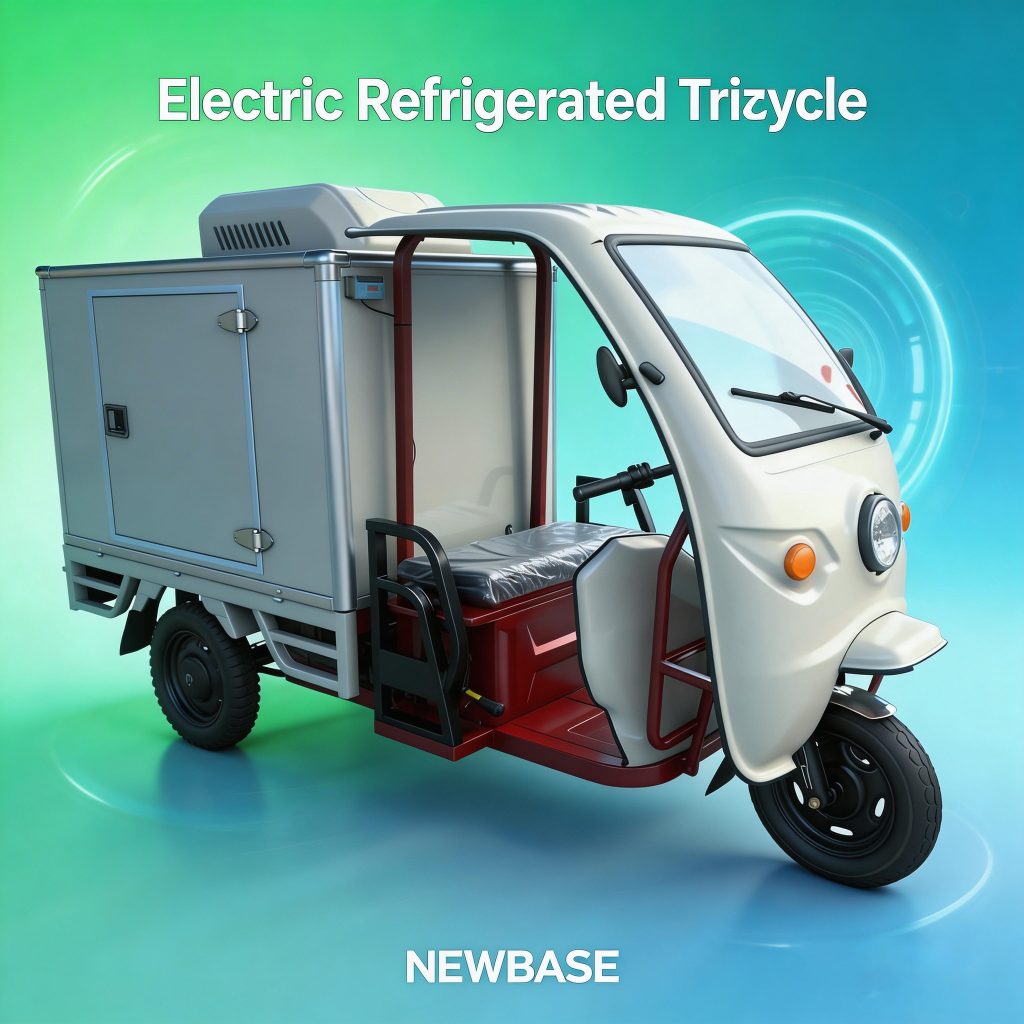
Introduction: The Strategic Shift in Last-Mile Cold Chain In the rapidly evolving landscape of urban logistics, “last-mile” delivery remains the most cost-intensive and complex segment. For B2B fleet operators, the traditional model of dedicated, fixed-body refrigerated tricycles often leads to low asset utilization and high maintenance overheads. The emergence of Removable Reefer Pods (Independent Mobile

Optimiser l'efficacité sur le dernier kilomètre : Pods frigorifiques amovibles conçus pour une flexibilité multi-chassis Lire la suite »

Garantir l'intégrité pharmaceutique : Systèmes de réfrigération IP67 pour la logistique urbaine à forte humidité

La livraison de vaccins, d'insuline et de produits biologiques de grande valeur sur le "dernier kilomètre" représente le maillon le plus critique de la chaîne d'approvisionnement pharmaceutique mondiale. Contrairement à la logistique alimentaire standard, la distribution pharmaceutique exige une stabilité thermique et une fiabilité des équipements absolues, en particulier lorsqu'il s'agit de naviguer dans l'humidité élevée et les conditions météorologiques imprévisibles des environnements urbains. Pour les opérateurs de flottes B2B, la transition vers des systèmes de réfrigération conformes à l'indice IP67 est une nécessité.

Garantir l'intégrité pharmaceutique : Systèmes de réfrigération IP67 pour la logistique urbaine à forte humidité Lire la suite »

Élimination des fluctuations de température dans les livraisons de produits alimentaires aux collectivités grâce à la technologie de fréquence variable à courant continu

The “last-mile” delivery of fresh produce and dairy products within urban communities represents one of the most challenging segments of the cold chain. Unlike long-haul transport, community delivery involves frequent door openings and varying traffic conditions, which often lead to significant temperature fluctuations. For B2B fleet operators, maintaining a stable thermal environment is not just

Élimination des fluctuations de température dans les livraisons de produits alimentaires aux collectivités grâce à la technologie de fréquence variable à courant continu Lire la suite »

fr_FRFrançais