
Published by NEWBASE | Technology Insights
The refrigerated transport industry is no longer focused solely on cooling performance.
Today, fleet operators are equally concerned with:
- Energy efficiency
- Temperature precision
- Operating cost reduction
- Intelligent management
As a result, refrigerated vehicle technology is rapidly evolving toward smarter and more sustainable solutions.
Refrigeration Technology Is Becoming More Intelligent
Modern refrigerated vehicles increasingly incorporate digital technologies to improve operational reliability.
Key technology upgrades include:
Digital Temperature Controllers
Advanced digital control systems enable:
- Accurate temperature adjustment
- Stable refrigeration performance
- Automatic temperature management
- Faster response to load changes
This is especially important for transporting products with strict temperature requirements.
Multi-Mode Cooling Capabilities
New refrigeration systems often support:
- Refrigeration mode
- Freezing mode
- Adjustable temperature ranges
This allows one vehicle platform to handle multiple cargo categories.
Applications include:
- Fresh food
- Frozen products
- 医薬品
- Specialty chemicals
Energy Efficiency Becomes Core Competitiveness
Energy consumption is becoming a critical evaluation factor for refrigerated transport equipment.
Fleet managers increasingly prioritize:
- Lower electricity consumption
- Higher refrigeration efficiency
- Longer operating duration
High-efficiency DC refrigeration systems are gaining popularity because they offer:
- Better energy conversion efficiency
- Lower operating noise
- Reduced maintenance complexity
Electric refrigeration technology is especially attractive for urban logistics applications.
Battery Technology Supports Refrigeration Innovation
Battery systems now play an important role in refrigerated vehicle performance.
Industry trends include:
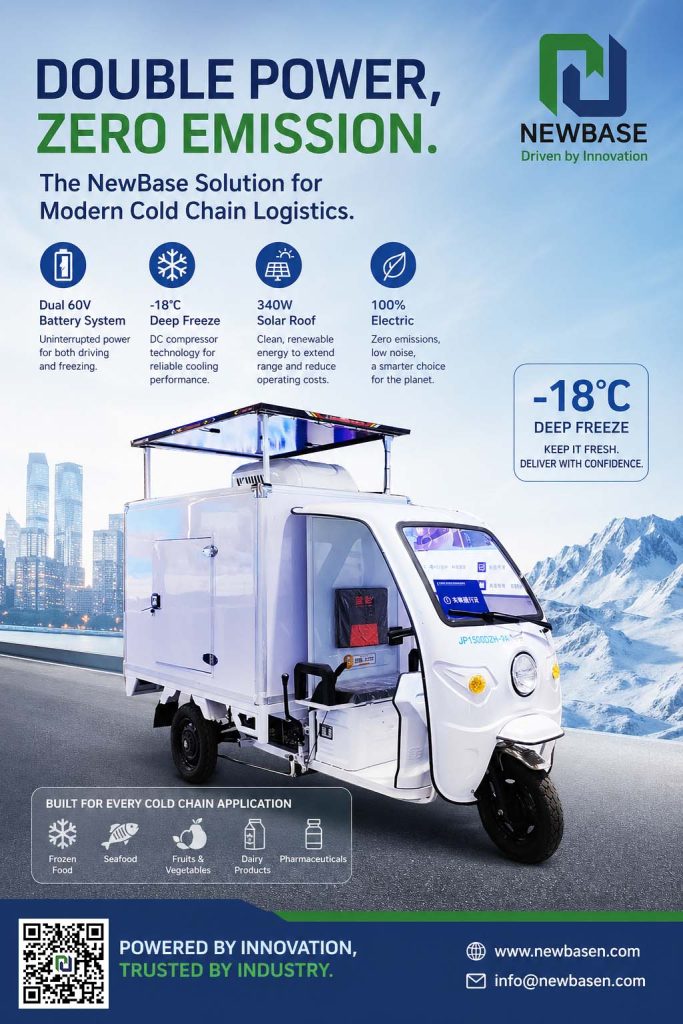
Independent Refrigeration Batteries
Separate battery systems for refrigeration improve:
- Power stability
- Cooling continuity
- Vehicle driving independence
This reduces operational risk.
Longer Operating Duration
Improved battery technology enables:
- Extended cooling time
- Longer delivery windows
- More reliable daily operations
This is critical for last-mile cold chain fleets.
Solar-Assisted Energy Systems Gain Momentum
Renewable energy is gradually being integrated into refrigeration platforms.
Solar charging systems can:
- Supplement battery charging
- Improve energy utilization
- Reduce charging frequency
Solar-assisted refrigerated vehicles are especially suitable for:
- High-frequency urban logistics
- Warm climate markets
- Daily distribution fleets
The Importance of Thermal Management Expertise
Efficient refrigeration is not only about compressor power.
Thermal management expertise determines:
- System efficiency
- Cooling consistency
- Equipment lifespan
- Reliability in harsh environments
This is why manufacturers with strong thermal management backgrounds are increasingly competitive in refrigerated transport markets.
NEWBASE’s Technical Advantage
NEWBASE leverages years of expertise in:
- Commercial vehicle thermal management
- Refrigeration systems
- Vehicle HVAC technology
- Battery thermal management systems
This technical foundation supports the company’s development of efficient refrigerated vehicle solutions for global customers.
Looking Ahead
Future refrigerated vehicle development will focus on:
- Electrification
- Intelligent control
- Renewable energy integration
- Higher energy efficiency
As the cold chain industry becomes more technology-driven, smart refrigeration systems will become a major differentiator.
NEWBASE will continue advancing refrigeration innovation to support smarter logistics worldwide.
Learn more about NEWBASE refrigeration and thermal management technologies.

