Industry Insights

Expert analysis on global trends in new energy commercial vehicles, cold chain logistics markets, and environmental regulations.

40%による先進のBTMS技術でフリート・バッテリーの交換コストを削減する方法

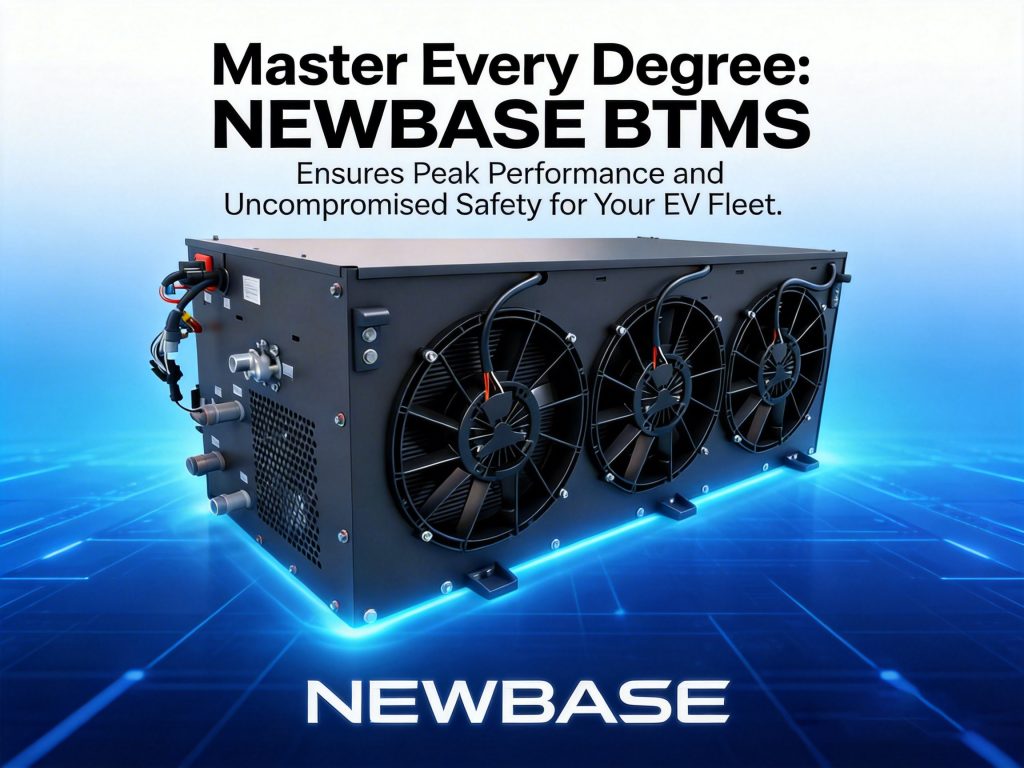
Battery degradation is the single largest financial risk for commercial electric vehicle operators. According to Geotab’s research analyzing data from over 10,000 electric vehicles, EV batteries currently degrade at an average rate of 1.8% per year — an improvement from the 2.3% rate seen in earlier models. But for a fleet operator running 50 heavy-duty electric trucks with 300 kWh battery packs, even 1.8% annual degradation means replacing batteries worth hundreds of thousands of dollars sooner than planned. The key variable in battery degradation that fleet operators can control is thermal management. The Thermal-Degradation Connection Lithium-ion battery degradation accelerates dramatically when cells operate outside their optimal temperature range of 15–35°C. […]

40%による先進のBTMS技術でフリート・バッテリーの交換コストを削減する方法 続きを読む »
液冷が商用EVバッテリー熱管理の業界標準になりつつある理由

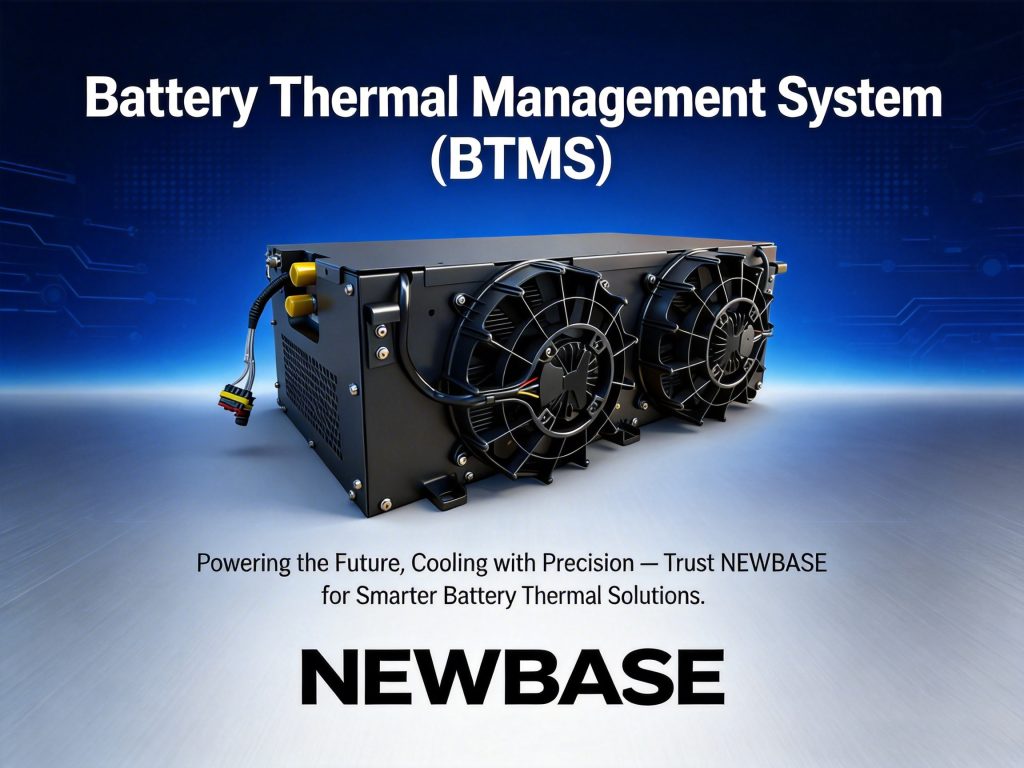
As electric commercial vehicles transition from early adoption to mainstream deployment, the limitations of traditional air-cooling systems have become impossible to ignore. In 2025, a comprehensive review published in MDPI’s journal Batteries systematically evaluated advanced cooling strategies — including indirect liquid cooling, phase change material (PCM) cooling, and hybrid approaches — and concluded that liquid cooling systems deliver the highest heat transfer efficiency for preventing thermal runaway in lithium-ion battery packs. The Physics Behind Liquid Cooling Superiority Liquid cooling works on a simple but powerful principle: liquids have significantly higher heat capacity and thermal conductivity than air. Water-glycol mixtures used in BTMS (Battery Thermal Management Systems) can absorb and transport

液冷が商用EVバッテリー熱管理の業界標準になりつつある理由 続きを読む »

ラストワンマイル・コールドチェーン配送の未来:小型電気冷凍車が世界で注目される理由

Published by NEWBASE | Industry Analysis The global cold chain industry is entering a new phase of transformation. Driven by the rapid growth of online grocery delivery, pharmaceutical logistics, fresh food e-commerce, and urban retail distribution, demand for efficient last-mile cold chain transportation is rising significantly. At the same time, logistics operators face mounting pressure from: These trends are accelerating the adoption of compact electric refrigerated vehicles. Why Last-Mile Cold Chain Is Becoming More Important Last-mile delivery represents one of the most critical and costly stages in cold chain logistics. Temperature-sensitive goods such as: must remain within strict temperature ranges throughout transportation. Any temperature deviation may lead to: As a

ラストワンマイル・コールドチェーン配送の未来:小型電気冷凍車が世界で注目される理由 続きを読む »

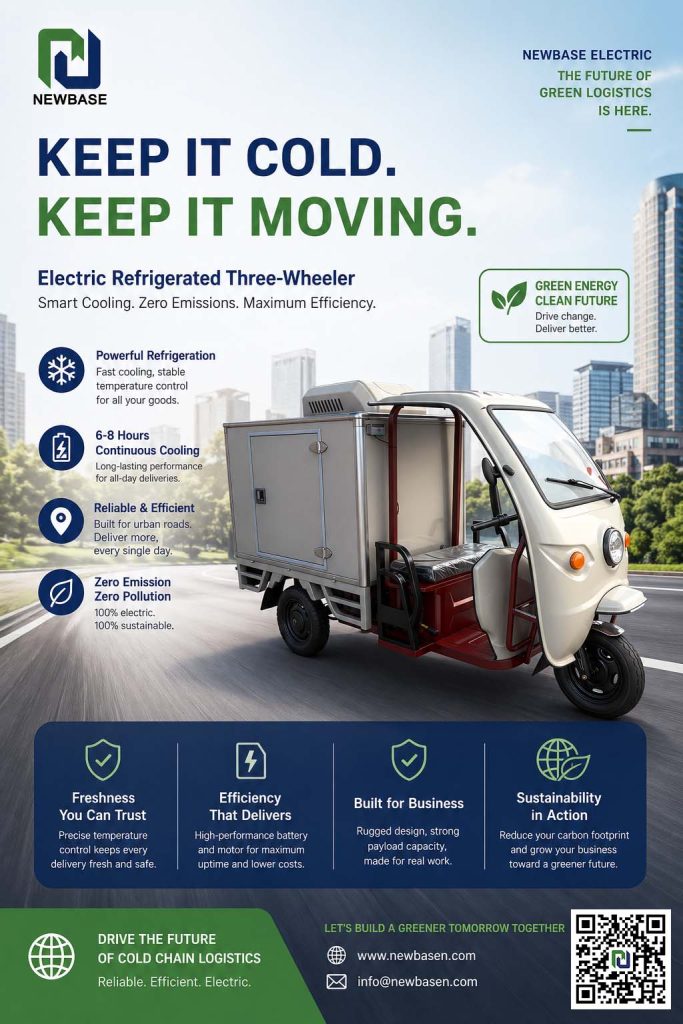
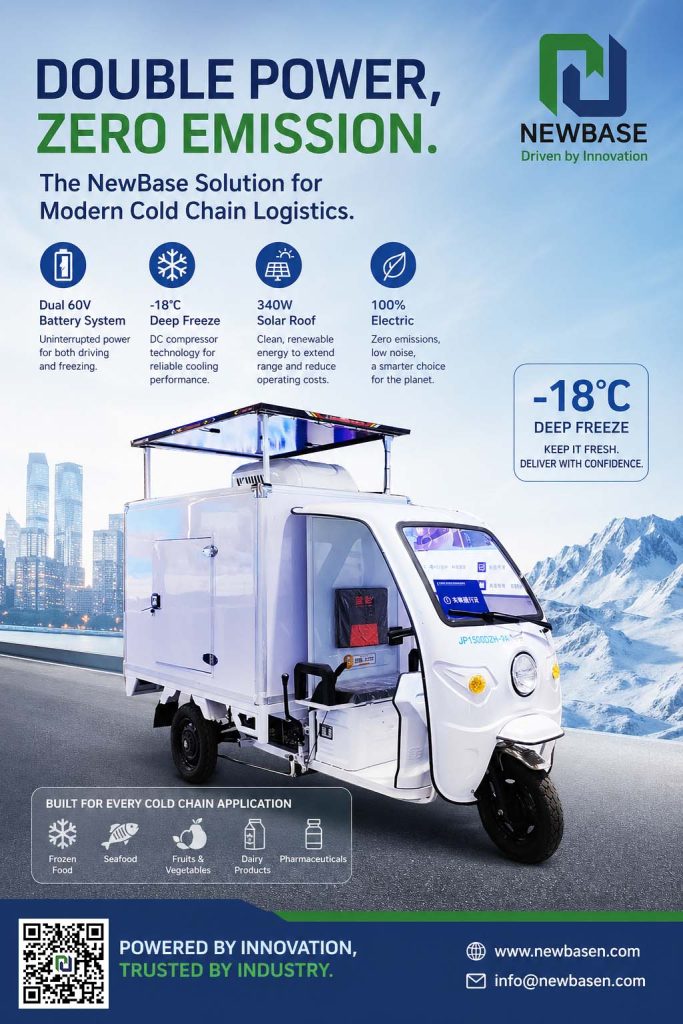
2026年、電動冷蔵三輪車は都市のコールドチェーン配送をどう変えるか

Published by NEWBASE | Cold Chain Logistics Insights As global demand for fresh food, pharmaceuticals, frozen products, and temperature-sensitive goods continues to rise, urban cold chain logistics is entering a new era of electrification and intelligent distribution. Traditional fuel-powered refrigerated vehicles face increasing pressure from rising fuel costs, stricter environmental regulations, and growing expectations for last-mile delivery efficiency. In response, electric refrigerated vehicles are becoming a preferred solution for modern urban logistics. NEWBASE has introduced its latest Electric Refrigerated Tricycle, designed specifically for short-distance cold chain transportation, urban delivery, retail distribution, and mobile refrigeration applications. Why Electric Refrigerated Vehicles Are Growing Fast The cold chain industry is experiencing rapid transformation

2026年、電動冷蔵三輪車は都市のコールドチェーン配送をどう変えるか 続きを読む »

Sustainable Refrigeration: How Low-GWP Refrigerants and Eco-Friendly TRU Technology Are Shaping the Future of Cold Chain Transport in 2026

By NEWBASE Sustainability Division | Published April 30, 2026 | 12 min read The refrigeration industry is in the midst of the most significant environmental transformation in its history. The global push to address climate change has placed transport refrigeration units — traditionally powered by diesel engines using HFC refrigerants with high global warming potential (GWP) — at the center of environmental scrutiny. As of January 2025, new EPA regulations under the American Innovation and Manufacturing (AIM) Act have begun phasing down the use of hydrofluorocarbons (HFCs), with specific requirements for transport refrigeration applications. For fleet operators, this regulatory shift represents both a challenge and an opportunity. NEWBASE is meeting this moment

Sustainable Refrigeration: How Low-GWP Refrigerants and Eco-Friendly TRU Technology Are Shaping the Future of Cold Chain Transport in 2026 続きを読む »

冷凍トラックの稼働時間を最大化する:2026年輸送用冷凍ユニットの完全メンテナンスガイド

By NEWBASE Aftermarket Services Team | Published April 30, 2026 | 13 min read In cold chain logistics, equipment downtime is the enemy of profitability — and more importantly, it is the enemy of cargo integrity. A refrigeration unit failure during transit can result in complete cargo loss, emergency service costs, customer penalties, and lasting reputational damage. According to industry data, the average cost of a single refrigerated truck breakdown ranges from $2,500 to $15,000 when accounting for cargo loss, emergency service, vehicle recovery, and missed delivery penalties. For fleet operators, the solution is not reactive repair — it is proactive maintenance that prevents failures before they occur. This comprehensive guide examines the

冷凍トラックの稼働時間を最大化する:2026年輸送用冷凍ユニットの完全メンテナンスガイド 続きを読む »

医薬品コールドチェーン物流:2026年のワクチン・生物製剤輸送における2〜8℃の温度コンプライアンスの確保

By NEWBASE Pharmaceutical Solutions Team | Published April 30, 2026 | 14 min read The global pharmaceutical cold chain logistics market is experiencing unprecedented growth, driven by the expanding distribution of mRNA vaccines, monoclonal antibodies, cell and gene therapies, and other biologics that require precision temperature control throughout the supply chain. According to market analysis from Yahoo Finance (2025), the North America pharmaceutical cold chain segment is projected to grow at a compound annual rate exceeding 12% through 2033, making it one of the fastest-growing segments in the broader cold chain industry. For transport operators, pharmaceutical cold chain represents both an opportunity and a challenge: the cargo is extraordinarily valuable (some shipments

医薬品コールドチェーン物流:2026年のワクチン・生物製剤輸送における2〜8℃の温度コンプライアンスの確保 続きを読む »

多温度輸送ソリューション:NEWBASEのデュアルゾーンおよびトリプルゾーン冷凍トラックはいかにしてフリート効率に革命をもたらしたか?

By NEWBASE Product Development Team | Published April 30, 2026 | 10 min read The economics of refrigerated transport have always favored load optimization — the more cargo a vehicle carries, the lower the per-unit transport cost. Yet for decades, fleet operators faced a painful choice: dedicate vehicles to single temperature ranges (accepting wasted capacity when no matching cargo was available) or compromise cargo integrity by mixing incompatible products in the same compartment. The emergence of multi-temperature transport refrigeration systems has fundamentally changed this equation. Today’s advanced multi-temp refrigerated trucks can maintain two, three, or even more independent temperature zones within a single vehicle, enabling fleet operators to maximize payload utilization while serving

多温度輸送ソリューション:NEWBASEのデュアルゾーンおよびトリプルゾーン冷凍トラックはいかにしてフリート効率に革命をもたらしたか? 続きを読む »

IoT対応冷凍トラックユニット:2026年、スマート温度モニタリングはコールドチェーン物流をどう変えるか

IoT-Enabled Refrigerated Truck Units: How Smart Temperature Monitoring is Transforming Cold Chain Logistics in 2026 By NEWBASE Technology Division | Published April 30, 2026 | 11 min read The days when truck drivers manually checked refrigeration gauges at each stop are rapidly disappearing. According to Fleetrabbit’s Cold Chain Logistics Technology Outlook for 2026, fleets deploying smart temperature monitoring, AI-driven diagnostics, and real-time alert systems are cutting product loss by up to 30% compared to traditional operations. The integration of Internet of Things (IoT) technology into transport refrigeration units represents one of the most significant advancements in cold chain logistics history — and NEWBASE is at the forefront of this transformation. The

IoT対応冷凍トラックユニット:2026年、スマート温度モニタリングはコールドチェーン物流をどう変えるか 続きを読む »

冷凍トラックユニットの設置と試運転:2026年フリートオペレーターのための完全テクニカルガイド

By NEWBASE Technical Services Team | Published April 30, 2026 | 12 min read The performance of a transport refrigeration unit is not determined solely by its design and manufacturing quality — it is equally dependent on how it is installed and commissioned. Even the most advanced refrigeration unit will deliver substandard performance, excessive operating costs, and premature failures if improperly installed. Industry data suggests that 15-25% of refrigeration unit problems are installation-related rather than inherent to the equipment itself. This technical guide provides fleet operators, installers, and service technicians with comprehensive guidance on proper installation procedures, commissioning protocols, and integration requirements for NEWBASE transport refrigeration units. Following these guidelines ensures

冷凍トラックユニットの設置と試運転:2026年フリートオペレーターのための完全テクニカルガイド 続きを読む »

ja日本語