
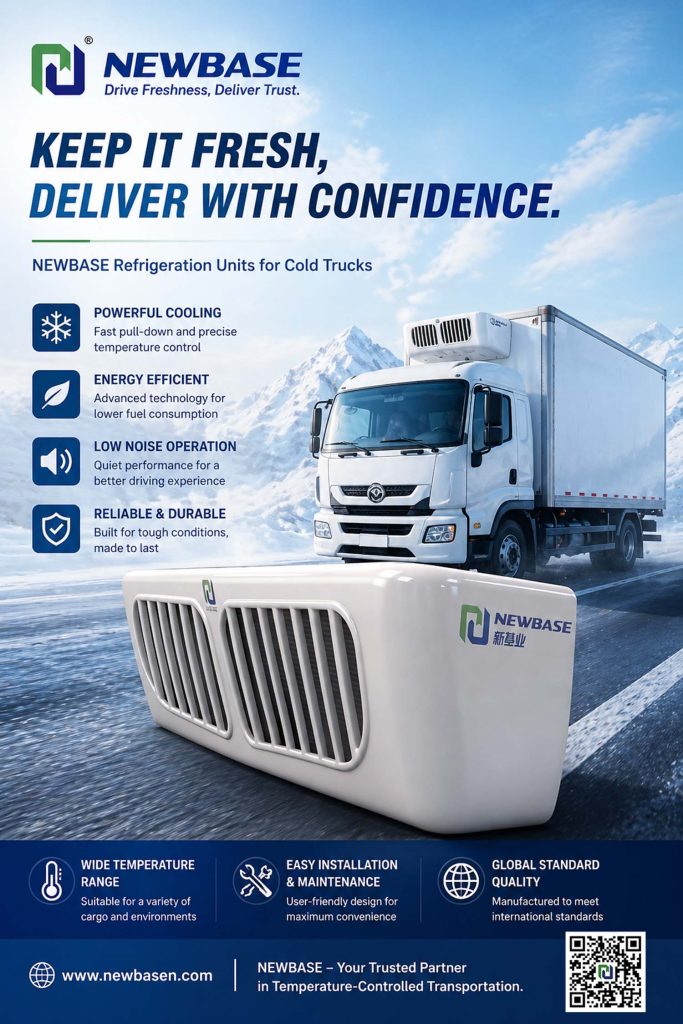
By NEWBASE Financial Analysis Team | Published April 30, 2026 | 10 min read
Индустрия коммерческих автомобилей переживает самые значительные преобразования в своей истории. По мере того как автопарки оценивают свои возможности в области охлаждения, спор между дизельными транспортными холодильными установками (TRU) и чисто электрическими холодильными системами, такими как NEWBASE NBESR-1000A, становится центральным для принятия инвестиционных решений. В этом комплексном анализе рассматриваются оба варианта по всем значимым параметрам - от стоимости приобретения до воздействия на окружающую среду - чтобы помочь операторам автопарков принять обоснованное решение о будущем холодильного оборудования.
Понимание вариантов
Дизельные транспортные холодильные установки (TRU)
Дизельные ТРУ уже несколько десятилетий являются стандартом для транспортного охлаждения:
- Компрессор с приводом от двигателя: Небольшой дизельный двигатель, специально предназначенный для холодильных установок
- Альтернатива с ременным приводом: Привод от двигателя автомобиля через ремень/кардан
- Вспомогательные силовые установки: Автономные дизельные генераторы для стационарной работы
NEWBASE NBESR-1000A Pure Electric
NBESR-1000A представляет собой современный подход:
- Встроенный электрический компрессор: Переменная скорость, электронное управление
- Прямое питание 48 В постоянного тока: Питается от электрической системы автомобиля
- Резервное питание AC380 В: сетевое питание для стационарной работы
- Встроенный интеллект: Возможность подключения IoT, расширенная диагностика
Общая стоимость владения: Анализ за 5 лет
Параметры анализа
Базовые предположения:
- Годовое время работы: 2 000 часов (типичная городская доставка)
- Цена топлива: $1.50/литр дизельного топлива, $0.12/кВтч электроэнергии
- Жизненный цикл оборудования: 5 лет
- Остаточная стоимость: 15% от первоначальной стоимости
- Операционная зона: Городская доставка, 70% миль в городских зонах
Сравнение совокупной стоимости владения за 5 лет
| Категория затрат | Дизельное топливо | NBESR-1000A Электрический | Разница |
| Установка | $2,500 | $1,500 | +$1,000 |
| Первоначальные инвестиции | $11,000 | $16,000 | -$5,000 |
| Топливо/энергия (5 лет) | $65,000 | $14,000 | +$51,000 |
| Техническое обслуживание (5 лет) | $18,000 | $6,500 | +$11,500 |
| Соответствие нормативным требованиям | $12,000 | $0 | +$12,000 |
| Влияние на время работы | $8,000 | $3,000 | +$5,000 |
| Остаточная стоимость | -$1,275 | -$2,175 | +$900 |
| 5-летняя совокупная стоимость владения | $112,725 | $37,325 | +$75,400 |
Выводы: NBESR-1000A обеспечивает снижение общей стоимости на $75 400 за 5 лет - экономия 67%.
Подробный анализ затрат
1. Затраты на энергию: Самая большая переменная
Энергия представляет собой наиболее значительные текущие расходы: Дизельное топливо TRU Energy Profile:
| Режим работы | Потребление | Стоимость за час |
| Городское вождение | 3,5-4,5 л/час | $5.25-6.75 |
| Стационарный (в режиме ожидания) | 2,0-3,0 л/час | $3.00-4.50 |
| Стационарный (рабочий) | 3,0-4,5 л/час | $4.50-6.75 |
NBESR-1000A Энергетический профиль:
| Режим работы | Потребление | Стоимость за час |
| Частичная нагрузка (0°C) | 1,5-2,0 кВтч | $0.18-0.24 |
| Поддержание температуры | 0,8-1,2 кВтч | $0.10-0.14 |
| Режим ожидания (мониторинг) | 0,1-0,15 кВт/ч | $0.01-0.02 |
| AC380V в режиме ожидания | Электроэнергия сети | Непиковые тарифы |
Сравнение годовых затрат на электроэнергию:
| Сценарий | Дизельное топливо в год | NBESR-1000A Годовой | Сбережения |
| С преобладанием городского населения | $12,500 | $2,400 | $10,100 |
| Тяжелый режим ожидания | $10,000 | $1,800 | $8,200 |
| Среднее | $11,000 | $2,200 | $8,800 |
5-летняя экономия энергии: $44,000
2. Затраты на обслуживание: Структурное преимущество электричества
Электрические системы имеют принципиально более простые требования к обслуживанию: Потребности в обслуживании дизельных ТРУ:
| Сервис | Частота | Стоимость одного мероприятия | Итого за 5 лет |
| Замена ремня | 1,000 часов | $350 | $700 |
| Обслуживание топливной системы | Ежегодно | $500 | $2,500 |
| Капитальный ремонт двигателя | 15 000 часов | $4,000 | (после 5 лет) |
| Электрическая система | Ежегодно | $300 | $1,500 |
| Обслуживание хладагента | Ежегодно | $350 | $1,750 |
| Итого 5-летняя | $9,250 |
NBESR-1000A Необходимость технического обслуживания:
| Сервис | Частота | Стоимость одного мероприятия | Итого за 5 лет |
| Очистка катушки | Ежегодно | $150 | $750 |
| Электрическая инспекция | Ежегодно | $150 | $750 |
| Проверка хладагента | Ежегодно | $150 | $750 |
| Калибровка контроллера | Ежегодно | $100 | $500 |
| Итого 5-летняя | $2,910 |
Экономия на техническом обслуживании за 5 лет: $6,340
3. Соответствие нормативным требованиям: Скрытые расходы на дизельное топливо
Затраты на регулирование часто упускаются из виду, но они значительны: Затраты на соответствие дизельного топлива нормативным требованиям:
| Категория | Годовая стоимость | Итого за 5 лет |
| Соответствие требованиям CARB (Калифорния) | $800 | $4,000 |
| Проверка на выбросы | $300 | $1,500 |
| Требования к модернизации | $3,500 | $3,500 (единоразово) |
| Итого 5-летняя | $16,500 |
NBESR-1000A Соответствие требованиям:
- Нулевая плата за доступ в город - квалифицируется как нулевой уровень выбросов
- Соответствие требованиям CARB
- Не требуется проверка на выбросы
- Не требуется модернизация
- Пятилетний итог: $0
5-летняя экономия на соблюдении норм: $16,500
4. Влияние на время простоя и надежность
Простои влекут за собой скрытые расходы, не ограничивающиеся потерей прибыли: Простои дизельных ТРУ:
- Среднее время работы: 92-95%
- Ожидаемое время простоя: 250-400 часов в течение 5 лет
- Поломки на дорогах: 2-4 случая в год
- Время восстановления после поломки: 3-6 часов
Время простоя NBESR-1000A:
- Среднее время безотказной работы: 97-99%
- Ожидаемое время простоя: 100-150 часов в течение 5 лет
- Поломки на дорогах: 0-1 случай в год
- Время восстановления после поломки: 1-2 часа
Сравнение стоимости простоя:
| Элемент затрат | Дизельное топливо | NBESR-1000A |
| Аварийная служба | $4,000 | $1,000 |
| Риск порчи груза | $3,000 | $1,000 |
| Время работы водителя | $2,000 | $800 |
| Итого 5-летняя | $17,000 | $5,800 |
Экономия времени простоя за 5 лет: $11,200
Нефинансовые соображения
Воздействие на окружающую среду
Сравнение выбросов углекислого газа:
| Метрика | Дизельное топливо | NBESR-1000A | Сокращение |
| NOₓ в час | 80g | 0g | 100% |
| PM в час | 3g | 0g | 100% |
| Годовой CO₂ (2 000 ч) | 21 метрическая тонна | 0 метрических тонн | 100% |
Примечание: Косвенные выбросы NBESR-1000A зависят от состава электросети.
Операционные преимущества
| Фактор | Дизельное топливо | NBESR-1000A | Преимущество |
| Уровень шума | 75-85 дБ | 55-65 дБ | Электрический |
| Точность температуры | ±2-3°C | ±0.5°C | Электрический |
| Работа в режиме ожидания | Высокая стоимость топлива | Низкая/нулевая стоимость | Электрический |
| Запуск в холодную погоду | Проблемные | Защищенный | Электрический |
Стратегическое позиционирование
Корпоративная устойчивость:
- Отчетность ESG выигрывает от сокращения объема 3
- Согласование с требованиями заказчика по устойчивому развитию
- Преимущество первого лица при переходе на электромобили
- Привлечение водителей, заботящихся об устойчивом развитии
Защита на будущее:
- Отсутствие риска будущих ограничений на выбросы
- Готовность к ужесточению регулирования
- Зафиксированное соответствие требованиям на весь срок службы автомобиля
Анализ сценариев
Сценарий 1: Городской автопарк с высокой степенью использования (3 000 часов/год)
| Категория | Дизельное топливо | NBESR-1000A | Преимущество |
| 5-летние эксплуатационные расходы | $98,000 | $25,000 | +$73,000 |
| 5-летняя совокупная стоимость владения | $109,000 | $41,000 | +$68,000 |
Рекомендация: Сильное преимущество NBESR-1000A - быстрая окупаемость
Сценарий 2: Региональный автопарк с низким уровнем использования (1 000 часов/год)
| Категория | Дизельное топливо | NBESR-1000A | Преимущество |
| 5-летние эксплуатационные расходы | $32,000 | $9,000 | +$23,000 |
| 5-летняя совокупная стоимость владения | $43,000 | $25,000 | +$18,000 |
Рекомендация: NBESR-1000A по-прежнему выгоден - окупаемость увеличена, но все еще положительна
Сценарий 3: Смешанная эксплуатация городских/автомобильных дорог (2 500 часов/год)
| Категория | Дизельное топливо | NBESR-1000A | Преимущество |
| 5-летние эксплуатационные расходы | $82,000 | $22,000 | +$60,000 |
| 5-летняя совокупная стоимость владения | $93,000 | $38,000 | +$55,000 |
Рекомендация: Уточните преимущество NBESR-1000A для любого реалистичного использования
Анализ периода окупаемости
Простой расчет окупаемости
Дополнительные инвестиции: $16,000 - $11,000 = $5,000 Годовая экономия: $8,800 (энергия) + $1,268 (обслуживание) + $3,300 (соответствие требованиям) + $2,240 (время простоя) = $15,608 Простая окупаемость: $5,000 / $15,608 = 3.8 месяца
Возврат инвестиций
Общие инвестиции: $16,000 Чистая экономия за 5 лет: $75,400 ROI: 471% Годовая рентабельность инвестиций: 94%
Чистая приведенная стоимость (5 лет, ставка дисконтирования 5%)
| Метрика | Дизельное топливо | NBESR-1000A |
| Преимущество NPV | +$65,000 |
Почему электричество - неизбежное будущее
Траектория регулирования
| Год | Ожидаемые изменения в законодательстве |
| 2028-2030 | CARB может потребовать нулевого уровня выбросов для дополнительных объектов |
| 2030-2035 | Крупные городские районы могут отказаться от использования дизельного топлива на последней миле |
Технологическая траектория
- Стоимость аккумуляторов продолжает снижаться
- Увеличение дальности хода автомобилей ускоряется
- Инфраструктура зарядных устройств быстро расширяется
- Повышение надежности электрических компонентов
Рыночные сигналы
- Крупные розничные компании, нуждающиеся в устойчивой логистике
- Потребители предпочитают "зеленые" варианты доставки
- Водители предпочитают современное оборудование
- Внедрение конкурентов создает конкурентное давление
Заключение: Экономика очевидна
Данные однозначны: NBESR-1000A обеспечивает:
- $75 400 Снижение совокупной стоимости владения за 5 лет
- Окупаемость менее чем за 4 месяца
- 471% возврат инвестиций
- Нулевые прямые выбросы
- Превосходный контроль температуры
- Снижение шумового загрязнения
- Не подвержены влиянию будущих нормативных актов
Дизельные ТРУ лица:
- Постоянные расходы на топливо, которые исключают электрические системы
- Увеличение регуляторного бремени по мере расширения зон
- Стареющие технологии в сравнении с прогрессивными электрическими системами
- Риск "лишних" активов в условиях ужесточения регулирования
Для операторов автопарков, стремящихся оптимизировать свою экономику и одновременно подготовиться к будущему, которое будет все более регулируемым и ориентированным на устойчивое развитие, NBESR-1000A представляет собой не просто лучший выбор, а неизбежный выбор. Вопрос больше не в том, переходить ли на электрическое охлаждение, а в том, как быстро это сделать. NBESR-1000A делает этот переход экономически оправданным с первого дня.
О NEWBASE: NEWBASE предоставляет операторам автопарков, оценивающим возможности электрического охлаждения, всестороннюю поддержку в проведении финансового анализа, включая индивидуальные расчеты совокупной стоимости владения и варианты пилотных программ. Ссылки:
1. NACFE - Исследование общей стоимости владения электрическим грузовиком в 2026 году
2. Thermo King - Экономический анализ электрических холодильников
3. Комиссия ЕС - Положение о зонах городской мобильности
4. ARB Калифорнии - Руководство по соблюдению требований TRU ATCM
5. МЭА - Глобальный прогноз по электромобилям на 2026 год
 Русский
  English
  Español
  Português
  العربية
  Français
  Bahasa Indonesia
  日本語
日本語  Română
  Deutsch
  Italiano