Case Studies & Applications

Real-world success stories demonstrating how NEWBASE solutions optimize performance for electric buses, refrigerated trucks, and logistics fleets.

Why Solar-Assisted Refrigerated Vehicles Are Becoming a Key Trend in Urban Logistics

Published by NEWBASE | Industry Insights Urban logistics is changing rapidly. With rising demand for cold chain transportation, increasing environmental regulations, and pressure to reduce operating costs, logistics operators are actively searching for smarter transportation solutions. Among emerging technologies, solar-assisted electric refrigerated vehicles are attracting growing attention. By combining electric drive systems, refrigeration technology, and […]

Why Solar-Assisted Refrigerated Vehicles Are Becoming a Key Trend in Urban Logistics Read More »

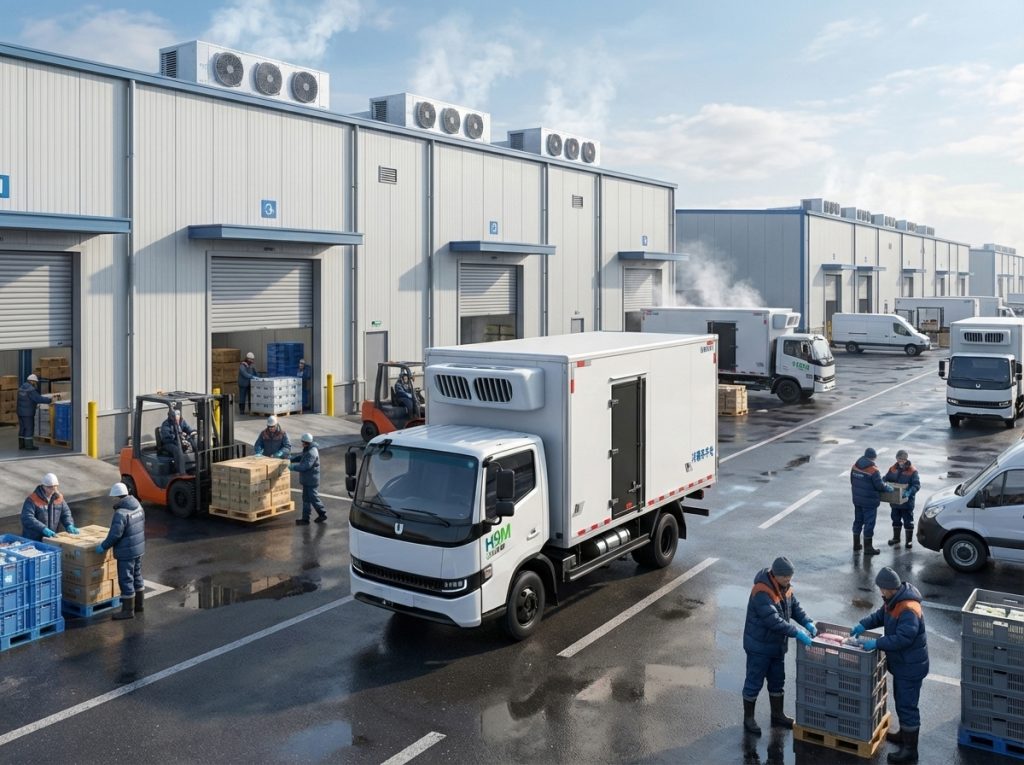
Maintaining -25°C Seafood Cold Chain: Deep-Freeze Solutions for Suburban Distribution

In the specialized field of cold chain logistics, the transportation of frozen seafood represents one of the most technically demanding segments. Maintaining a consistent temperature of -25°C (-13°F) is not merely a quality standard; it is a critical safety requirement to prevent cellular degradation and bacterial growth in high-value marine proteins. For B2B distributors serving

Maintaining -25°C Seafood Cold Chain: Deep-Freeze Solutions for Suburban Distribution Read More »

Liquid Cooling vs Air Cooling for Battery Thermal Management

Introduction The choice of cooling methodology fundamentally shapes battery thermal management system performance. This technical analysis compares liquid cooling and air cooling approaches, examining thermodynamics, implementation considerations, and application suitability based on engineering data and field experience. Fundamental Differences Air Cooling Systems Air cooling utilizes forced air circulation to dissipate heat from battery packs. The

Liquid Cooling vs Air Cooling for Battery Thermal Management Read More »

Quality Assurance and Testing Protocols for Water-Cooled BTMS

Comprehensive Testing Ensures Water-Cooled BTMS Reliability Quality assurance for commercial vehicle water-cooled BTMS requires rigorous testing across multiple parameters. Manufacturers implement comprehensive test programs that verify performance, durability, and safety before units reach customers. Performance Verification Testing Cooling efficiency testing quantifies heat removal capability under controlled conditions. Test procedures use calibrated heat sources to simulate

Quality Assurance and Testing Protocols for Water-Cooled BTMS Read More »

Comparative Analysis: 5KW to 16KW Water-Cooled Unit Selection Guide

Selecting the Right Water-Cooled BTMS Capacity: A Technical Comparison Choosing the appropriate cooling capacity is fundamental to effective battery thermal management. Water-cooled units range from 5kW to 16kW, with each capacity level suited to specific vehicle types and operational requirements. This article provides a detailed technical comparison to guide selection decisions. Capacity Overview and Target

Comparative Analysis: 5KW to 16KW Water-Cooled Unit Selection Guide Read More »

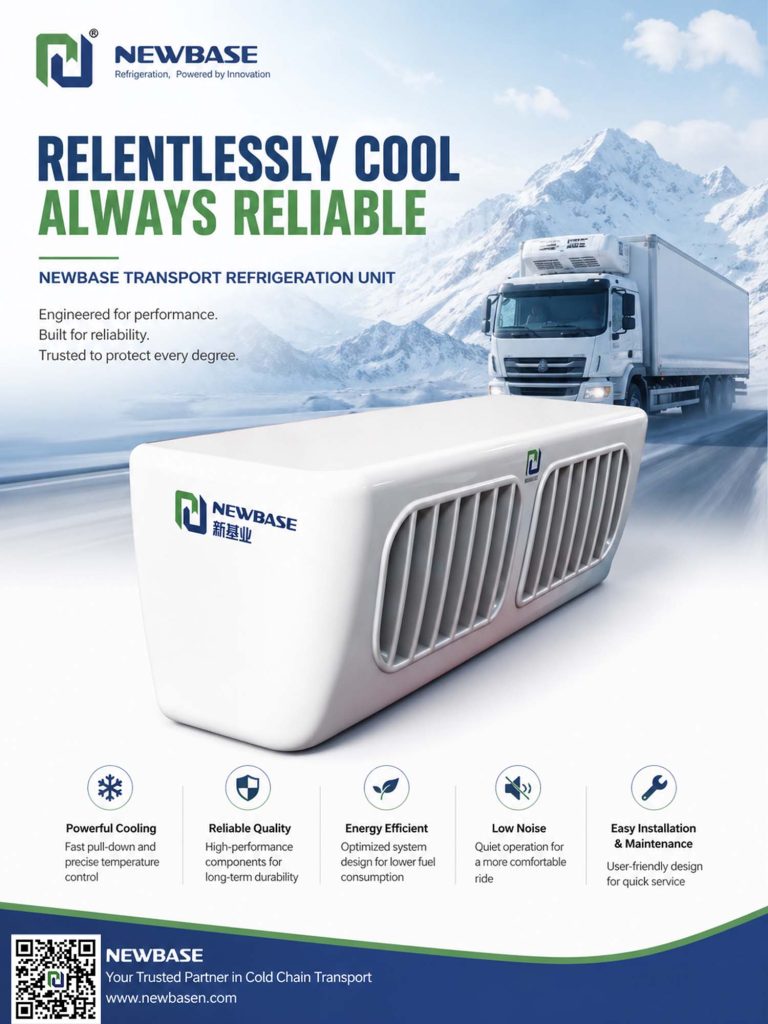
Refrigerated Van Refrigeration Unit

Refrigerated Van Refrigeration Unit: NBESR1000A – Advanced Cooling Technology for Modern Cold Chain Logistics As global supply chains evolve toward sustainability and efficiency, NewBase introduces the next generation of refrigerated van technology with its NBESR1000A Refrigerated Van Refrigeration Unit. Designed for electric, hydrogen, methanol, and range-extended light-duty commercial vehicles (7.5–8.5 meters), this innovative system is

Refrigerated Van Refrigeration Unit Read More »

en_USEnglish