News

Stay updated with NEWBASE’s latest corporate announcements, exhibition schedules, and company milestones.

Liquid Cooling vs Air Cooling for Battery Thermal Management

Introduction The choice of cooling methodology fundamentally shapes battery thermal management system performance. This technical analysis compares liquid cooling and air cooling approaches, examining thermodynamics, implementation considerations, and application suitability based on engineering data and field experience. Fundamental Differences Air Cooling Systems Air cooling utilizes forced air circulation to dissipate heat from battery packs. The […]

Liquid Cooling vs Air Cooling for Battery Thermal Management Read More »

BTMS for Electric Vehicles: Efficiency Optimization Strategies

Executive Summary Electric vehicle range anxiety and battery longevity remain top concerns for EV adoption. Battery Thermal Management Systems (BTMS) play a pivotal role in addressing these challenges. This article explores proven efficiency optimization strategies for EV thermal management systems, drawing from real-world implementation data and technical research. The Critical Role of Temperature Management Battery

BTMS for Electric Vehicles: Efficiency Optimization Strategies Read More »

8kW Liquid-Cooled Battery Thermal Management System: Technical Deep Dive

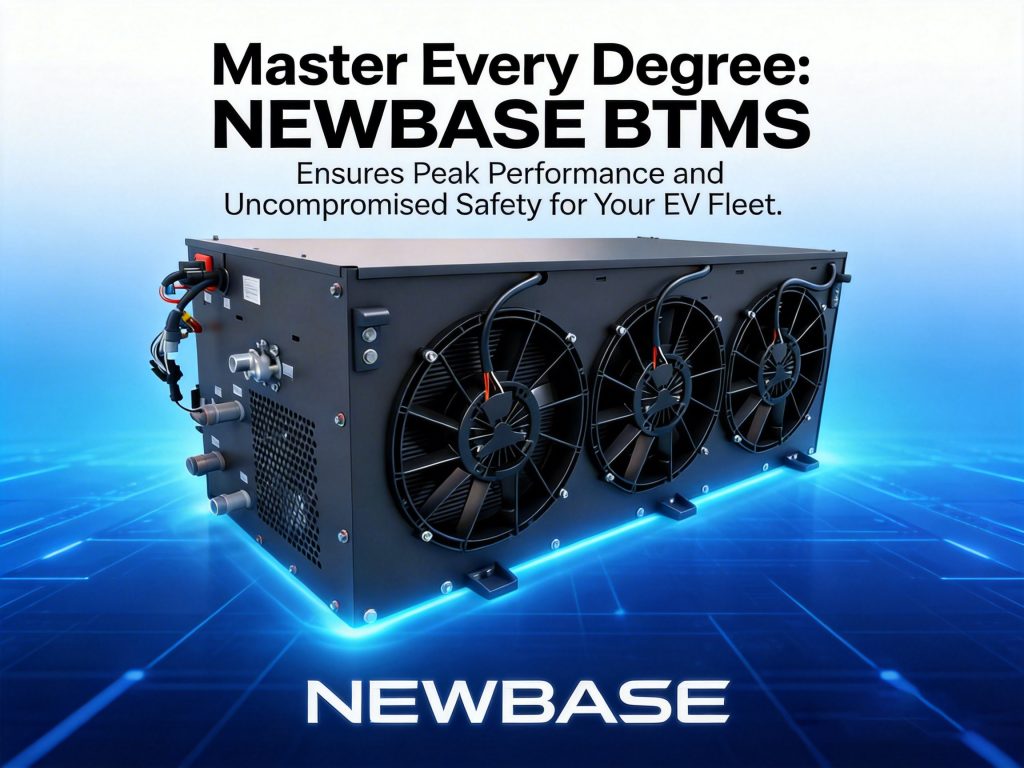
Introduction As electric vehicles (EVs) and energy storage systems (ESS) continue to accelerate global energy transition, battery thermal management has become a critical factor determining system performance, longevity, and safety. This article provides a comprehensive technical analysis of 8kW-class liquid-cooled battery thermal management systems (BTMS), based on practical engineering implementation and industry best practices. System

8kW Liquid-Cooled Battery Thermal Management System: Technical Deep Dive Read More »

Quality Assurance and Testing Protocols for Water-Cooled BTMS

Comprehensive Testing Ensures Water-Cooled BTMS Reliability Quality assurance for commercial vehicle water-cooled BTMS requires rigorous testing across multiple parameters. Manufacturers implement comprehensive test programs that verify performance, durability, and safety before units reach customers. Performance Verification Testing Cooling efficiency testing quantifies heat removal capability under controlled conditions. Test procedures use calibrated heat sources to simulate

Quality Assurance and Testing Protocols for Water-Cooled BTMS Read More »

Water-Cooled BTMS Applications in Electric Commercial Vehicles and Energy Storage

Industry Applications of Water-Cooled Battery Thermal Management Systems Water-cooled BTMS technology serves diverse applications across commercial transportation and stationary energy storage. Each application presents unique thermal management challenges that inform system selection and integration. Electric Bus Thermal Management Electric buses represent a mature application for water-cooled BTMS. Urban transit buses operate in stop-and-go patterns with

Water-Cooled BTMS Applications in Electric Commercial Vehicles and Energy Storage Read More »

Core Technologies in Commercial Vehicle Water-Cooled BTMS

Advanced Technologies Powering Modern Water-Cooled Battery Thermal Management Systems Commercial vehicle water-cooled BTMS represents a convergence of multiple technologies: refrigeration, fluid dynamics, thermal engineering, and vehicle electronics. Understanding these core technologies clarifies system capabilities and informs integration decisions. Refrigeration Cycle Technology The foundation of water-cooled BTMS is the vapor-compression refrigeration cycle. This proven technology efficiently

Core Technologies in Commercial Vehicle Water-Cooled BTMS Read More »

Comparative Analysis: 5KW to 16KW Water-Cooled Unit Selection Guide

Selecting the Right Water-Cooled BTMS Capacity: A Technical Comparison Choosing the appropriate cooling capacity is fundamental to effective battery thermal management. Water-cooled units range from 5kW to 16kW, with each capacity level suited to specific vehicle types and operational requirements. This article provides a detailed technical comparison to guide selection decisions. Capacity Overview and Target

Comparative Analysis: 5KW to 16KW Water-Cooled Unit Selection Guide Read More »

Understanding Water-Cooled Battery Thermal Management Systems for Commercial Vehicles

Water-Cooled BTMS for Commercial Vehicles: A Complete Technical Overview Battery thermal management is critical for electric commercial vehicles. Without proper temperature control, batteries experience reduced performance, accelerated degradation, and potential safety risks. Water-cooled Battery Thermal Management Systems (BTMS) have emerged as the industry standard for managing battery temperatures in demanding commercial vehicle applications. How Water-Cooled

Understanding Water-Cooled Battery Thermal Management Systems for Commercial Vehicles Read More »

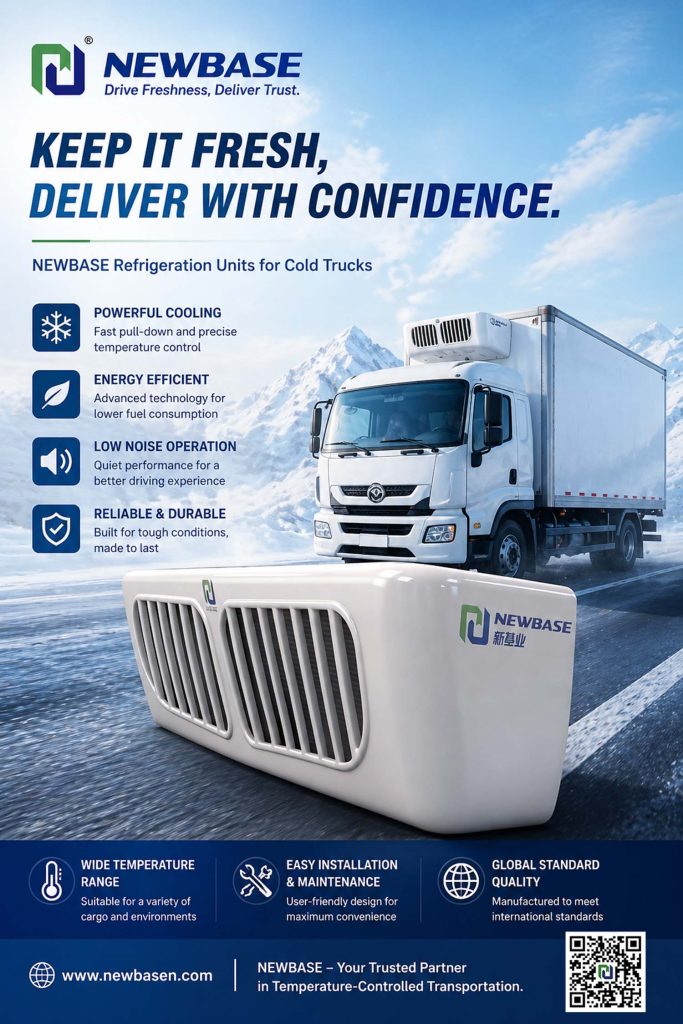
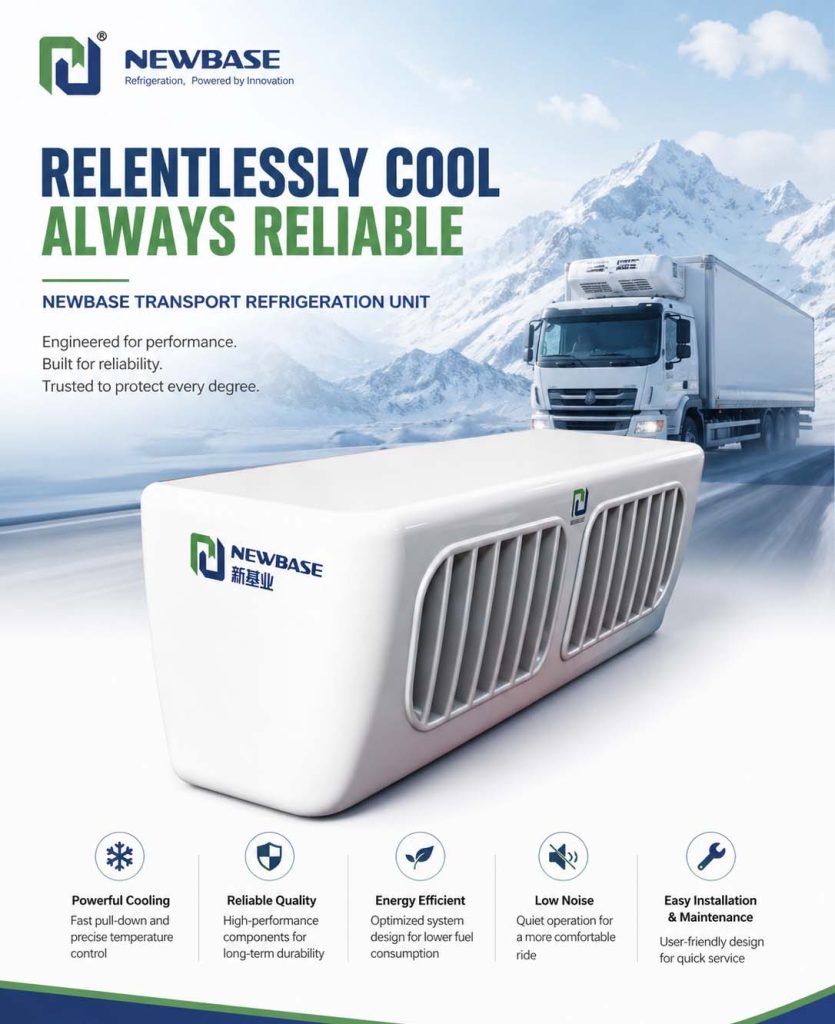
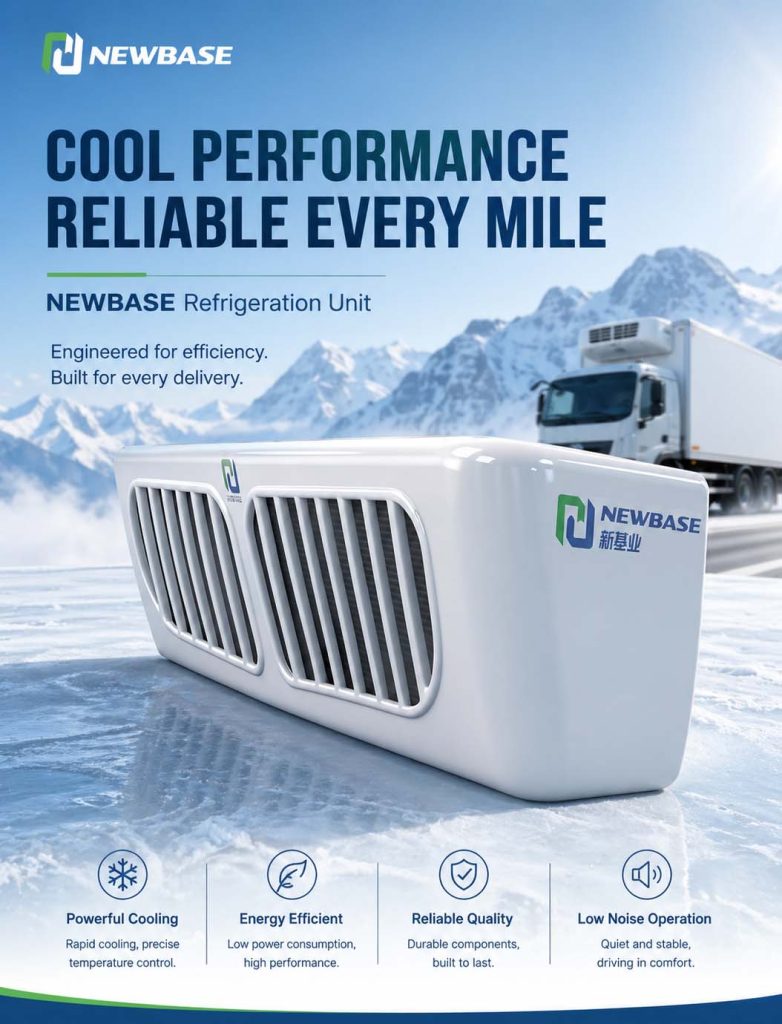
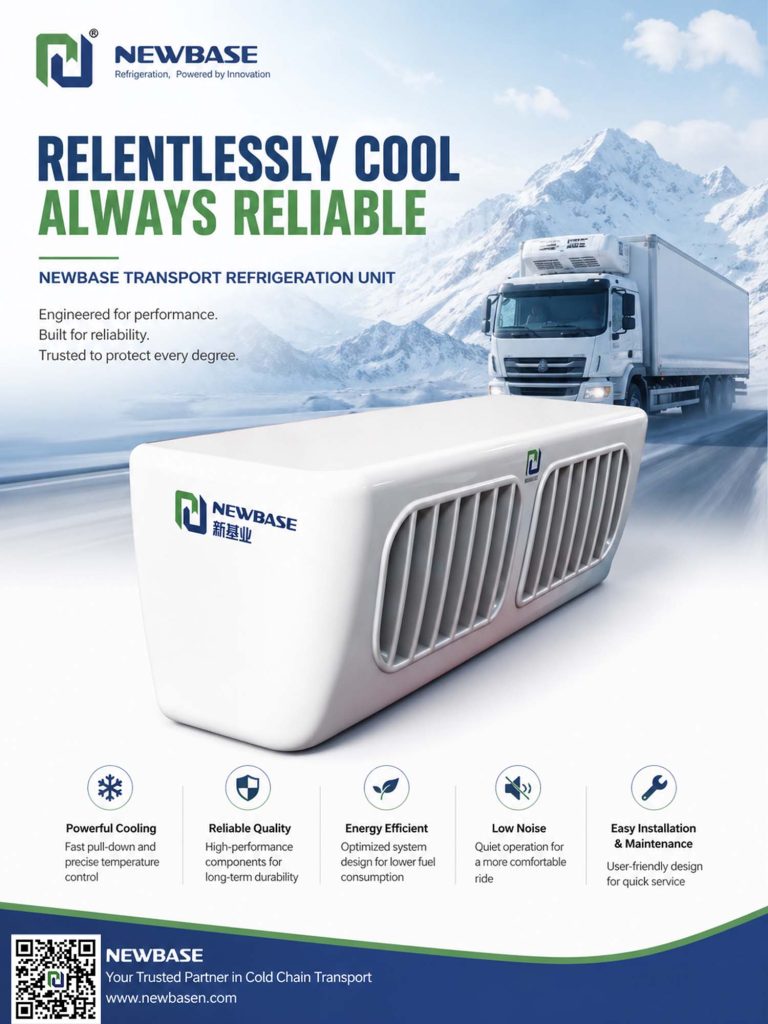
Refrigerated Van Refrigeration Unit

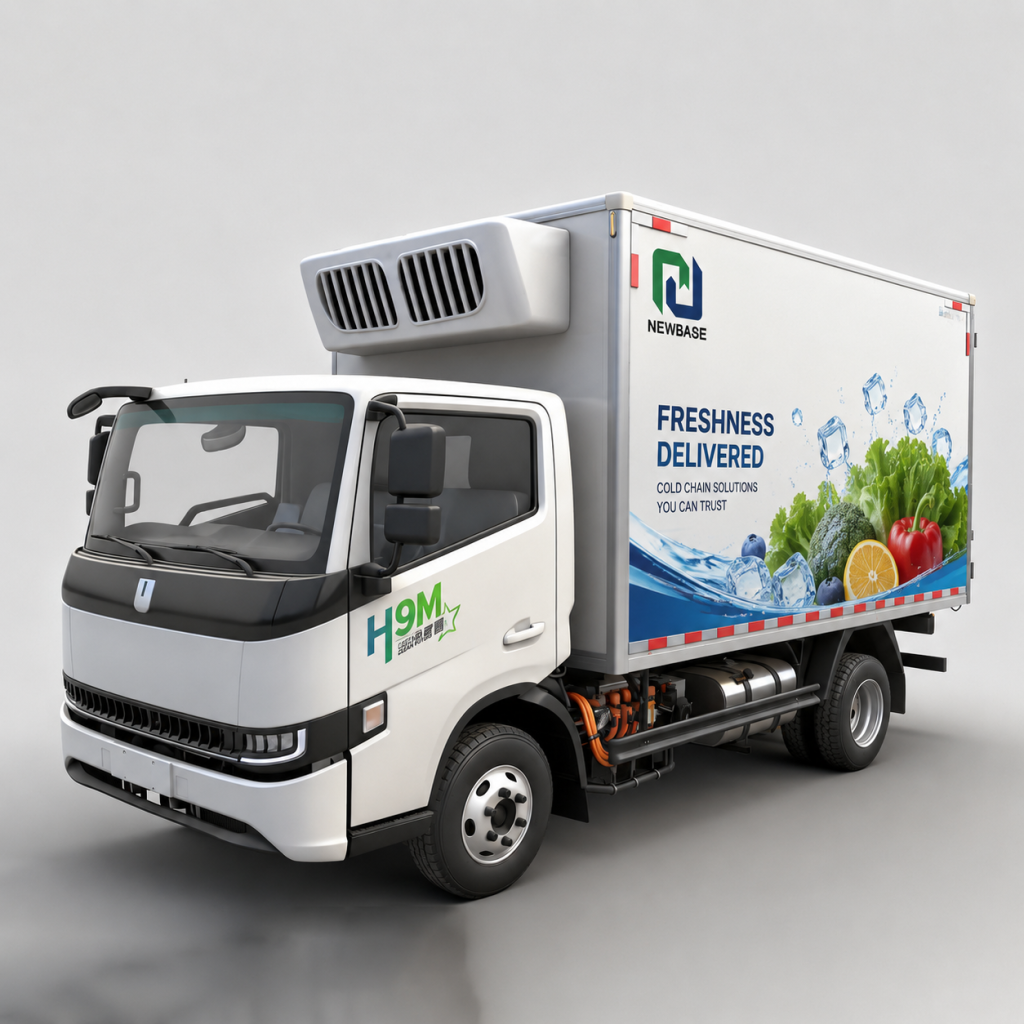
Refrigerated Van Refrigeration Unit: NBESR1000A – Advanced Cooling Technology for Modern Cold Chain Logistics As global supply chains evolve toward sustainability and efficiency, NewBase introduces the next generation of refrigerated van technology with its NBESR1000A Refrigerated Van Refrigeration Unit. Designed for electric, hydrogen, methanol, and range-extended light-duty commercial vehicles (7.5–8.5 meters), this innovative system is

Refrigerated Van Refrigeration Unit Read More »

NEWBASE Refrigerated Truck Unit: Advanced Cooling, Airflow & Eco-Efficiency for Modern Cold Chain

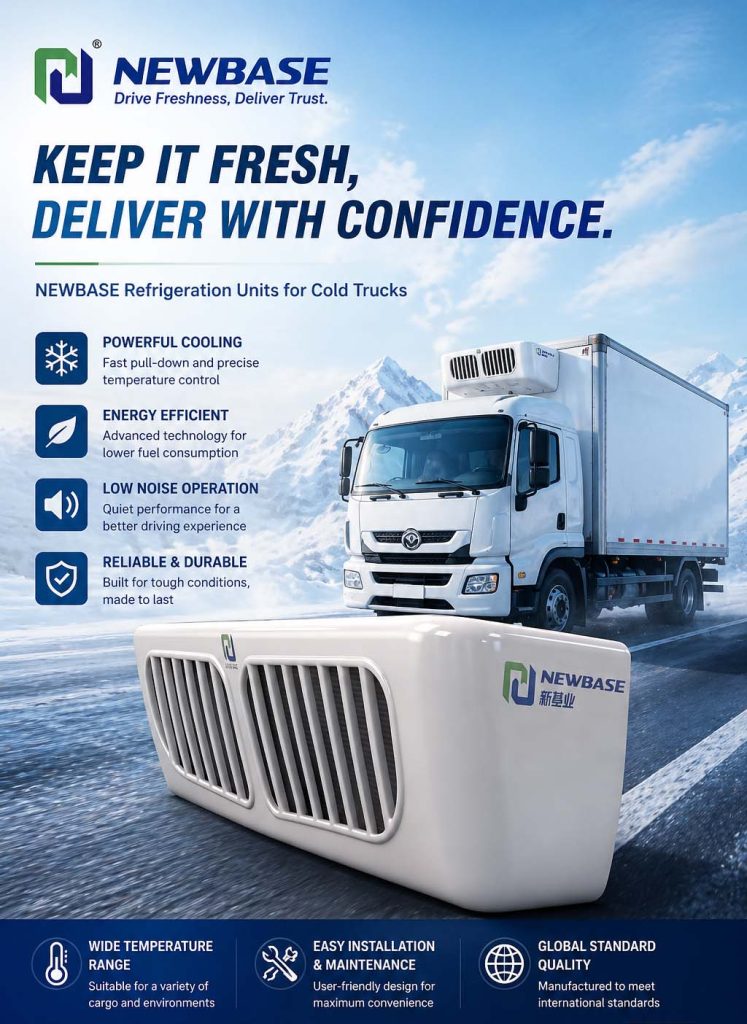
In today’s fast-moving logistics environment, reliable temperature control isn’t just a feature—it’s a necessity. NEWBASE is proud to introduce its latest generation of refrigerated truck cooling units, engineered to deliver precision, uniformity, and sustainability for urban and regional cold chain transport. Designed for refrigerated vans and light- to medium-duty trucks, our units integrate intelligent refrigeration

NEWBASE Refrigerated Truck Unit: Advanced Cooling, Airflow & Eco-Efficiency for Modern Cold Chain Read More »

en_USEnglish